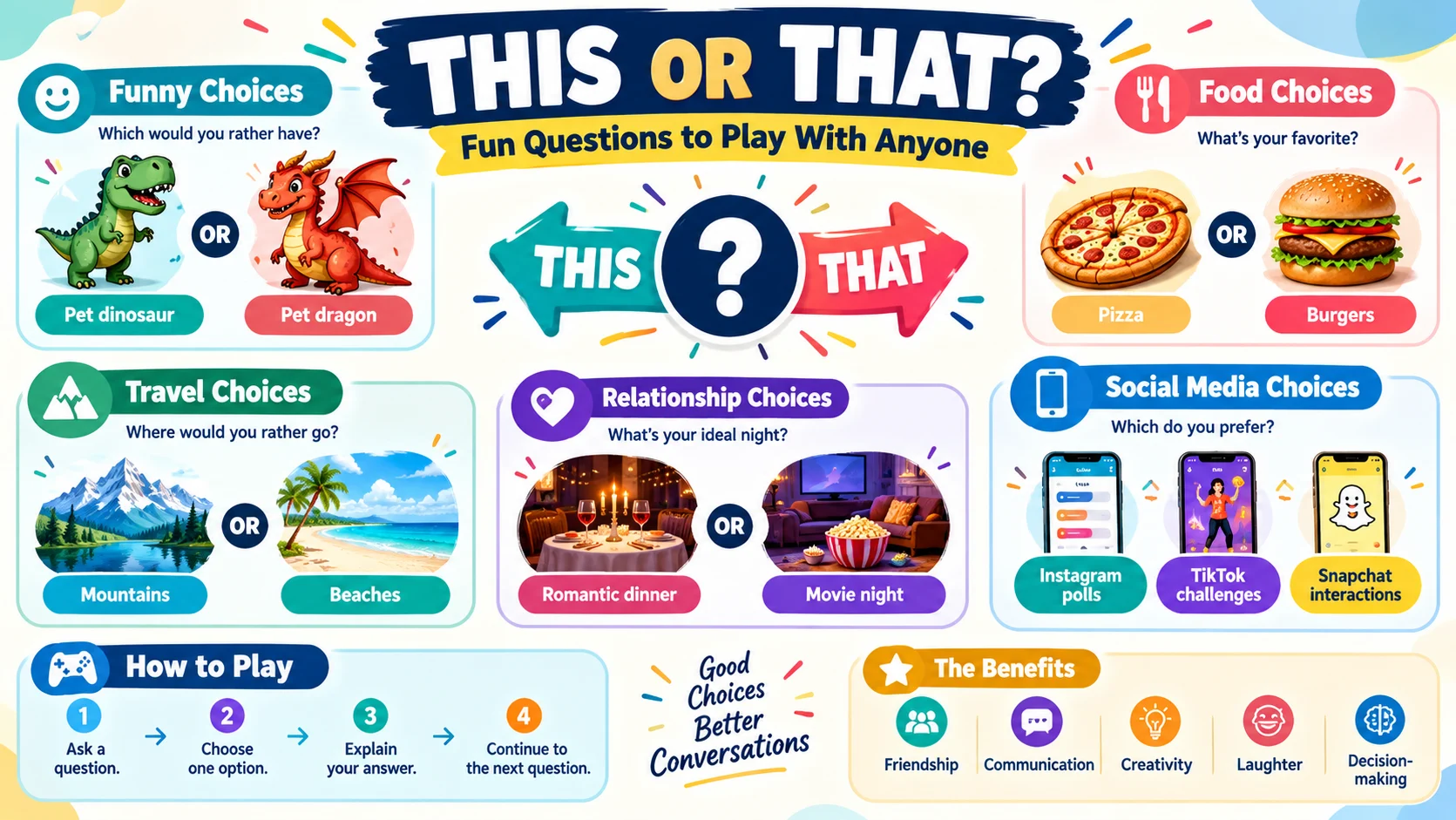
The this or that game is a fun activity where players choose between two options and explain their preferences. Questions such as “Coffee or tea?” and “Beach or mountains?” make the game entertaining and help people learn about each other’s interests. It can be played with friends, couples, families, classmates, or online through social media polls. The game is simple, requires no equipment, and works for almost any age group.
Have you ever struggled to choose between pizza and burgers, summer and winter, or staying home and going on an adventure? These everyday choices are what make the this or that game so entertaining. It is a simple question-based activity where players select one of two options, share their preferences, and sometimes explain the reasons behind their decisions.
Unlike complicated games that require equipment, preparation, or special skills, this activity can begin with just one question. Moreover, it works well in different situations, whether you are spending time with friends, enjoying a family gathering, planning a classroom activity, or getting to know someone new.
The best part is that there are no complicated rules or wrong answers. Players can choose between funny, challenging, personal, or completely random options. As a result, even a simple question can lead to surprising answers and interesting conversations.
In this guide, you will discover how to play, explore hundreds of creative question ideas, learn different game variations, and find out how to make the activity more exciting for every occasion.
What Is a This or That Game?
A this or that game is a preference-based activity in which participants choose between two different options. One person asks a question, and the other selects the option they like, prefer, or find more interesting.
For example:
- Coffee or tea?
- Cats or dogs?
- Summer or winter?
- Movies or television shows?
- City life or country life?
The idea is straightforward: players must choose one option rather than selecting both. However, they can explain their decisions if the group wants to make the activity more interactive.
Furthermore, the questions can cover almost any subject, including food, entertainment, travel, fashion, relationships, hobbies, and lifestyle.
Some questions are easy because most people already have a favorite. Others are difficult because both options may be equally appealing.
For instance, choosing between pizza and burgers might be easy for a food lover. On the other hand, deciding between traveling the world and having unlimited money can create a much longer discussion.
Ultimately, the activity combines entertainment, personal preferences, quick decisions, and social interaction.
How to Play the This or That Game
One reason people enjoy the this or that game is that anyone can understand its rules within seconds. You do not need a board, cards, dice, or complicated instructions.
Follow these simple steps to get started.
Choose the Players
First, decide who will participate. You can play with two people, a small group, or a large gathering.
For example, friends can play during a casual conversation, while teachers can use the activity as a classroom icebreaker.
Ask a Two-Option Question
Next, one player asks a question containing two choices.
Examples include:
- Breakfast or dinner?
- Reading or writing?
- Swimming or cycling?
- Android or iPhone?
Make sure both options are clear so everyone understands the question.
Select One Option
Each participant chooses their preferred answer. Players should avoid selecting both options because the purpose is to make a decision.
Additionally, you can introduce a short time limit to make difficult questions more exciting.
Explain Your Choice
Although explanations are optional, they make the activity more interesting.
For instance, someone choosing mountains over beaches might explain that they enjoy cool weather, peaceful surroundings, and hiking.
Consequently, players learn more about each other’s personalities and interests.
Continue With New Questions
Finally, move to another question and allow everyone to participate.
You can take turns asking questions or let one person become the host. Either way, keep the questions varied to maintain everyone’s interest.
Best This or That Game Questions
The right questions can turn an ordinary conversation into an entertaining activity. Therefore, it helps to prepare different categories based on the players and occasion.
Below are some popular ideas for different groups.
Funny This or That Questions
Funny questions are perfect for breaking the ice and making people laugh. They often involve silly situations, unusual preferences, or amusing choices.
Try these questions:
- Talk to animals or understand every language?
- Wear pajamas everywhere or formal clothes every day?
- Have a pet dinosaur or a pet dragon?
- Laugh every time you speak or sing every time you walk?
- Eat pizza with a spoon or soup with a fork?
- Have spaghetti for hair or marshmallows for teeth?
- Be invisible or be able to fly?
- Live without music or live without movies?
- Have a funny voice or a funny walk?
- Always sneeze before speaking or hiccup after laughing?
- Have unlimited snacks or unlimited desserts?
- Fight one giant chicken or ten tiny dinosaurs?
- Wear mismatched shoes or mismatched socks?
- Have a talking dog or a singing cat?
- Accidentally send every text to the wrong person or forget everyone’s birthday?
These questions are especially useful during parties, group chats, and casual gatherings. Moreover, unusual choices often produce the funniest explanations.
This or That Questions for Friends
Friends can use these questions to discover shared interests and learn surprising things about one another.
Here are some enjoyable options:
- Road trip or airplane travel?
- Shopping or watching movies?
- Sleepovers or outdoor adventures?
- Beach party or house party?
- Board games or video games?
- Texting or calling?
- Sunrise or sunset?
- Adventure or relaxation?
- Comedy or horror movies?
- Shopping malls or online shopping?
- Camping or hotel stays?
- Ice cream or chocolate?
- Group vacations or solo trips?
- Music festivals or sports events?
- Cooking together or ordering food?
- Summer vacation or winter vacation?
- Early mornings or late nights?
- Photography or painting?
- Coffee dates or dinner dates?
- Staying in or going out?
Additionally, friends can ask follow-up questions to discover why someone selected a particular option.
This or That Questions for Couples
Couples can use this activity to explore preferences, understand each other’s habits, and enjoy meaningful conversations.
However, keep the questions comfortable and respectful so both people can participate freely.
Try these romantic and relationship-focused ideas:
- Romantic dinner or movie night?
- Flowers or chocolates?
- Beach vacation or mountain getaway?
- Morning cuddles or evening cuddles?
- Surprise gifts or planned dates?
- Love letters or sweet text messages?
- Cooking together or dining out?
- Dancing together or watching movies?
- Weekend getaway or staycation?
- Matching outfits or matching accessories?
- Long conversations or quiet moments?
- Adventure dates or relaxing dates?
- Sunrise together or sunset together?
- Handmade gifts or expensive gifts?
- Public affection or private romance?
- Road trips or international vacations?
- Breakfast in bed or dinner by candlelight?
- Comedy movies or romantic movies?
- Phone calls or video calls?
- Celebrating anniversaries or celebrating small moments?
These questions can make date nights more engaging. Furthermore, they offer an easy way to discover preferences without turning the conversation into a serious interview.
This or That Questions for Kids
Children enjoy simple questions about animals, food, cartoons, toys, and imaginative situations.
For younger players, choose familiar options and avoid questions that require complicated explanations.
Here are some child-friendly ideas:
- Cats or dogs?
- Ice cream or cupcakes?
- Superheroes or princesses?
- Drawing or coloring?
- Swimming or running?
- Dinosaurs or dragons?
- Chocolate milk or strawberry milk?
- Legos or puzzles?
- Cartoon movies or animated shows?
- Summer or winter?
- Trains or airplanes?
- Chocolate or vanilla?
- Space or underwater adventures?
- Singing or dancing?
- Playground or swimming pool?
- Apples or bananas?
- Robots or aliens?
- Reading stories or listening to stories?
- Magic powers or super strength?
- Building sandcastles or making snowmen?
Teachers and parents can also use these questions to encourage children to communicate their thoughts and practice decision-making.
This or That Questions for Teens
Teenagers often enjoy questions about technology, fashion, entertainment, school life, and personal preferences.
These ideas work well during classroom activities, sleepovers, and social gatherings.
- TikTok or Instagram?
- Sneakers or boots?
- Gaming or streaming?
- Texting or video calling?
- School trips or school parties?
- Sneakers or sandals?
- Pop music or hip-hop?
- Shopping online or in stores?
- Movies or web series?
- Summer break or winter break?
- Snapchat or WhatsApp?
- Streetwear or formal fashion?
- YouTube or Netflix?
- Group projects or individual assignments?
- Concerts or sports matches?
- Smartphones or laptops?
- Photography or video editing?
- Pizza or burgers?
- Studying at home or in a library?
- Fame or privacy?
These choices can encourage entertaining discussions about everyday teenage life.
Food and Drink This or That Questions
Food questions are among the easiest ways to start the activity because almost everyone has favorite meals and drinks.
Try these delicious comparisons:
- Pizza or burgers?
- Coffee or tea?
- Chocolate or vanilla?
- Pancakes or waffles?
- French fries or onion rings?
- Ice cream or cake?
- Tacos or burritos?
- Pasta or noodles?
- Fried chicken or grilled chicken?
- Sushi or seafood?
- Hot chocolate or iced coffee?
- Donuts or cookies?
- Apples or oranges?
- Smoothies or milkshakes?
- Sandwiches or wraps?
- Spicy food or sweet food?
- Homemade food or restaurant food?
- Breakfast or dinner?
- Lemonade or orange juice?
- Popcorn or nachos?
For an extra challenge, ask players to explain their choice without using the words “good,” “better,” or “delicious.”
Travel and Adventure This or That Questions
Travel-related choices are excellent for people who love exploring new places and imagining exciting experiences.
Consider these options:
- Mountains or beaches?
- Paris or New York?
- Road trip or cruise?
- Camping or luxury hotels?
- Forests or deserts?
- City tours or nature walks?
- International travel or local travel?
- Train or airplane?
- Backpacking or resort vacations?
- Snowboarding or surfing?
- Sunrise hikes or sunset walks?
- Historical sites or modern attractions?
- Island holidays or countryside escapes?
- Traveling alone or with friends?
- Adventure sports or relaxing holidays?
- Wildlife safaris or underwater diving?
- Hotels or vacation rentals?
- Exploring new cities or revisiting favorite places?
- Winter destinations or tropical destinations?
- Weekend trips or month-long vacations?
These questions are particularly useful for travel enthusiasts and vacation planning conversations.
Deep This or That Questions
Sometimes, the best questions are not funny or random. Instead, they encourage players to think about their values, priorities, and personal goals.
Use these thoughtful choices:
- Love or success?
- Wealth or happiness?
- Freedom or security?
- Knowledge or wisdom?
- Fame or respect?
- Honesty or kindness?
- Adventure or stability?
- Past memories or future possibilities?
- A peaceful life or an exciting life?
- Being understood or being admired?
- A long life or a meaningful life?
- Personal growth or professional success?
- Following your heart or following your mind?
- More time or more money?
- Living near family or traveling the world?
- Forgiving or forgetting?
- Taking risks or staying comfortable?
- Helping others or achieving personal goals?
- A small circle of close friends or a large social network?
- Knowing the future or changing the past?
These questions can create deeper conversations. Nevertheless, players should never feel pressured to explain personal choices.
Spicy This or That Questions for Adults
For adult groups, slightly daring questions can add excitement and humor. Keep the questions appropriate for the participants and their comfort levels.
Here are some playful ideas:
- Romantic vacation or adventurous getaway?
- Flirting over text or face-to-face?
- Candlelight dinner or rooftop date?
- Surprise kiss or surprise gift?
- Fancy restaurant or private dinner?
- Love at first sight or friendship first?
- Late-night conversations or early-morning dates?
- Dancing together or singing together?
- A spontaneous date or a planned date?
- Matching tattoos or matching outfits?
- Romantic comedy or romantic drama?
- A secret admirer or a public admirer?
- Long-distance romance or living nearby?
- Love notes or voice messages?
- A surprise weekend trip or a surprise party?
Remember that the goal is entertainment, not making anyone uncomfortable.
Hard This or That Questions
Hard questions are useful when players want a real challenge. Both choices should be attractive, meaningful, or difficult to give up.
Try these challenging options:
- Never use the internet again or never watch television again?
- Have unlimited money or unlimited free time?
- Travel anywhere or meet anyone?
- Live without music or live without movies?
- Know every language or play every instrument?
- Relive your favorite memory or create a new one?
- Have a dream job or a dream home?
- Become famous or remain completely anonymous?
- Always tell the truth or never speak again?
- Have perfect health or unlimited wealth?
- Explore space or explore the deepest ocean?
- Change one mistake from the past or see one event from the future?
- Have unlimited books or unlimited video games?
- Live in a big city or own a peaceful countryside home?
- Be the smartest person in the room or the most creative?
These choices encourage players to think carefully before answering.
This or That Game for Social Media
Social media has made two-option questions especially popular because they are easy to understand and encourage audience participation.
People can share questions through stories, polls, short videos, posts, and group conversations.
Instagram users can create interactive Stories using the Poll sticker.
For example:
Coffee or tea?
- Coffee
- Tea
Followers can tap their preferred answer and see the results. Additionally, creators can use themed question collections to increase interaction.
TikTok
TikTok creators can turn questions into short videos using text overlays, voiceovers, and trending sounds.
For example:
“Choose your weekend: Beach or mountains?”
Viewers can comment with their answers. Meanwhile, creators can prepare multiple questions in one video to encourage more participation.
Snapchat
Snapchat users can share two-option questions through Stories and direct messages.
For instance:
“Pizza or burgers?”
Friends can respond with their preferences and continue the conversation privately.
Facebook users can post simple comparison questions to encourage comments.
For example:
“Which would you choose: A peaceful vacation or an exciting adventure?”
Friends and followers can share their opinions and explain their choices.
Benefits of Playing This or That
Although the activity is simple, it offers several social and communication benefits.
Encourages Communication
Players get opportunities to share opinions and discuss everyday preferences. Consequently, conversations can become more natural and engaging.
Helps People Get to Know Each Other
Questions about hobbies, food, travel, and lifestyle reveal interesting details about participants.
For example, you might discover that a friend prefers quiet evenings while everyone else enjoys parties.
Builds Social Connections
The activity gives people an easy way to interact, especially when they do not know each other well.
Moreover, funny questions can help reduce awkwardness during first meetings.
Supports Decision-Making
Players practice choosing between two options. Although these decisions are usually simple, they encourage quick thinking and personal judgment.
Makes Group Activities More Entertaining
The game requires almost no preparation. Therefore, it works well at birthday parties, family gatherings, classrooms, road trips, and casual get-togethers.
Encourages Creativity
Unusual questions allow players to imagine different situations and consider possibilities they might not normally think about.
Advantages and Disadvantages of This or That
Every activity has strengths and limitations. Understanding both can help you use the game more effectively.
Advantages
- Easy to learn and play.
- Suitable for different age groups.
- Requires no special equipment.
- Encourages social interaction.
- Creates opportunities for laughter.
- Works in person and online.
- Can be customized for different occasions.
- Helps people discover shared interests.
Disadvantages
- Repetitive questions can become boring.
- Some choices may feel too personal.
- Players may disagree about sensitive topics.
- Large groups can take longer to finish.
- Two options may not represent everyone’s actual preferences.
- Some participants may feel uncomfortable explaining their decisions.
Fortunately, these disadvantages are easy to manage. Choose suitable questions, respect different opinions, and introduce new categories to keep the activity interesting.
Different Ways to Play This or That
The basic activity is simple, but you can introduce variations to make it more exciting.
Rapid-Fire Round
Players must answer each question within three to five seconds.
This variation works well when you want a fast-paced challenge. Additionally, the short time limit makes difficult choices more entertaining.
Elimination Round
Every participant answers the same question. Players who choose the less popular option are eliminated.
Continue asking questions until one participant remains. However, you should decide how ties will work before starting.
Guess Your Friend
One person answers a question while the others try to guess their choice.
For example, ask the group whether a friend would prefer a beach vacation or a mountain trip.
This version tests how well people know each other.
Team Challenge
Divide participants into two teams. Each team discusses a question and agrees on one answer.
Afterward, both teams explain their choices. This variation encourages teamwork and friendly debate.
Online Poll Challenge
Create two-option polls on social media and invite followers to participate.
You can also share the results in a follow-up post to keep the conversation going.
This or That vs. Would You Rather
Both activities involve choosing between two options. However, their main purposes are slightly different.
| Feature | This or That | Would You Rather |
|---|---|---|
| Main Purpose | Discover preferences | Explore hypothetical choices |
| Question Style | Two simple options | Two possible situations |
| Difficulty | Usually easy | Can be challenging |
| Answer Type | Personal preference | Hypothetical decision |
| Example | Coffee or tea? | Would you rather never drink coffee or never drink tea? |
| Common Use | Icebreakers and social polls | Parties and conversation games |
| Tone | Casual and flexible | Funny, thoughtful, or challenging |
In short, this or that focuses more on preferences, while would you rather often presents hypothetical situations.
Common Mistakes to Avoid
Even though the activity has simple rules, a few mistakes can make it less enjoyable.
Giving More Than Two Choices
The central idea is to choose between two options. Therefore, avoid adding several alternatives to one question.
Asking Repetitive Questions
Repeating similar questions can make participants lose interest. Instead, mix food, entertainment, travel, lifestyle, and funny topics.
Making Questions Too Personal
Not everyone wants to discuss private matters. For this reason, respect boundaries and allow players to skip uncomfortable questions.
Forcing People to Explain Every Answer
Explanations can make conversations interesting, but they should remain optional.
Ignoring Different Opinions
People have different tastes and experiences. Consequently, avoid making fun of someone simply because their answer differs from yours.
Making Questions Too Complicated
Long questions can confuse participants. Keep each choice short, clear, and easy to understand.
Tips for Creating Better This or That Questions
If you want to create your own question collection, follow these practical tips.
- Keep questions simple: Use familiar words and straightforward choices.
- Mix different topics: Include food, hobbies, relationships, entertainment, and travel.
- Know your audience: Choose age-appropriate questions.
- Balance easy and difficult choices: A mixture keeps players interested.
- Use unexpected combinations: Unusual options can produce funny answers.
- Encourage explanations: Invite players to share their reasons without forcing them.
- Avoid sensitive subjects: Respect personal boundaries.
- Keep the activity moving: Do not spend too much time on every question.
Furthermore, consider the occasion when preparing your questions. A classroom activity may need educational choices, while a birthday party might benefit from funny and surprising options.
This or That Game Examples in Real Conversations
Here are some short examples showing how the activity works in everyday situations.
Example: Friends
Person A: “Beach or mountains?”
Person B: “Mountains. I love the peaceful atmosphere.”
Example: Couples
Person A: “Movie night or dinner date?”
Person B: “Dinner date. We can try somewhere new.”
Example: Family
Parent: “Pizza or burgers?”
Child: “Pizza, because I love cheese!”
Example: Classroom
Teacher: “Science or mathematics?”
Student: “Science. I enjoy learning how things work.”
Example: Social Media
Creator: “Choose one: Summer or winter?”
Follower: “Winter! I love cold weather.”
These examples show how easily the activity fits into different conversations.
Practice: This or That Questions With Answers
Test your understanding with these sample questions. Remember, most answers are based on personal preferences rather than fixed rules.
Question: Which is a better example of a this or that question?
A. What is your favorite color?
B. Red or blue?
Answer: B. Red or blue? It presents two clear choices.
Question: Can two people play this activity?
A. Yes
B. No
Answer: A. Yes. Two people can take turns asking and answering questions.
Question: Which question is more suitable for a funny round?
A. Have a pet dragon or a pet dinosaur?
B. What is your address?
Answer: A. Have a pet dragon or a pet dinosaur? It is imaginative and entertaining.
Question: Do players always need to explain their answers?
A. Yes
B. No
Answer: B. No. Explanations are optional.
Question: Which platform can be used for online polls?
A. Instagram
B. Both Instagram and Facebook
Answer: B. Both Instagram and Facebook support interactive polling options.
Question: What is the main purpose of this activity?
A. Discover preferences and have fun.
B. Test academic knowledge.
Answer: A. Discover preferences and have fun. Although educational versions are possible, entertainment and interaction are the main purposes.
Frequently Asked Questions
What is the this or that game?
The this or that game is a simple question-based activity where players choose between two options. It helps people discover preferences, start conversations, and enjoy time together.
How do you play this or that?
One person asks a question with two choices, and the other players select their preferred option. Participants can explain their answers, and the group continues with new questions.
Is this or that a good icebreaker?
Yes. It is an excellent icebreaker because the questions are easy to answer and do not require special knowledge. Moreover, participants can discover common interests without having to introduce themselves through formal conversations.
Can you play this or that with two people?
Absolutely. Two people can take turns asking questions and choosing answers. Couples, friends, siblings, and classmates can all enjoy this simple activity.
What are some funny this or that questions?
Funny questions include having a pet dinosaur or dragon, singing every time you walk or dancing every time you speak, and eating pizza with a spoon or soup with a fork.
What are good this or that questions for couples?
Couples can try romantic dinner or movie night, surprise gifts or planned dates, beach vacations or mountain getaways, and morning cuddles or evening cuddles.
Is this or that the same as would you rather?
No. Both activities involve choosing between two options, but their question styles differ. This or that usually asks about preferences, while would you rather presents hypothetical situations.
Can kids play this or that?
Yes. Children can enjoy age-appropriate questions about animals, food, toys, cartoons, sports, and hobbies. Parents and teachers can also use the activity to encourage communication.
How many questions should you ask?
There is no fixed limit. You can ask five to ten questions for a quick activity or continue with 30, 50, or even 100 questions during a longer gathering.
Can you play this or that online?
Yes. You can share questions through Instagram Stories, TikTok videos, Snapchat, Facebook posts, and messaging apps. Online polls also make it easy for followers to participate.
What makes a good this or that question?
A good question presents two clear and interesting choices. It should match the participants’ age, interests, and comfort levels while encouraging quick decisions or meaningful discussions.
Is this or that suitable for parties?
Yes. It works particularly well at birthday parties, family gatherings, sleepovers, and social events because it requires little preparation and can include many participants.
Key Takeaways
- The this or that game is a simple activity based on choosing between two options.
- Players can enjoy it with friends, couples, children, families, and classmates.
- Questions can cover food, travel, relationships, entertainment, hobbies, and everyday life.
- The activity works in person and through social media platforms.
- Different variations, such as rapid-fire rounds and team challenges, make it more exciting.
- Players should respect different preferences and avoid uncomfortable questions.
- There are no universally correct answers because most choices depend on personal taste.
Conclusion
The this or that game is an easy and entertaining way to bring people together, discover personal preferences, and start interesting conversations. Its simple format makes it suitable for almost any occasion, from casual hangouts and family gatherings to classroom activities and online interactions.
Whether you choose funny questions, romantic comparisons, food preferences, or challenging life decisions, the activity offers endless opportunities for entertainment. Moreover, you can customize the questions according to your audience and introduce different variations to keep everyone involved.
You do not need expensive equipment or complicated instructions to get started. Simply choose two interesting options, ask a question, and let everyone make their choice.
So, what would you choose: Coffee or tea? Beach or mountains? Movies or music? Start asking, share your answers, and enjoy the fun!