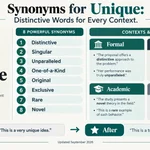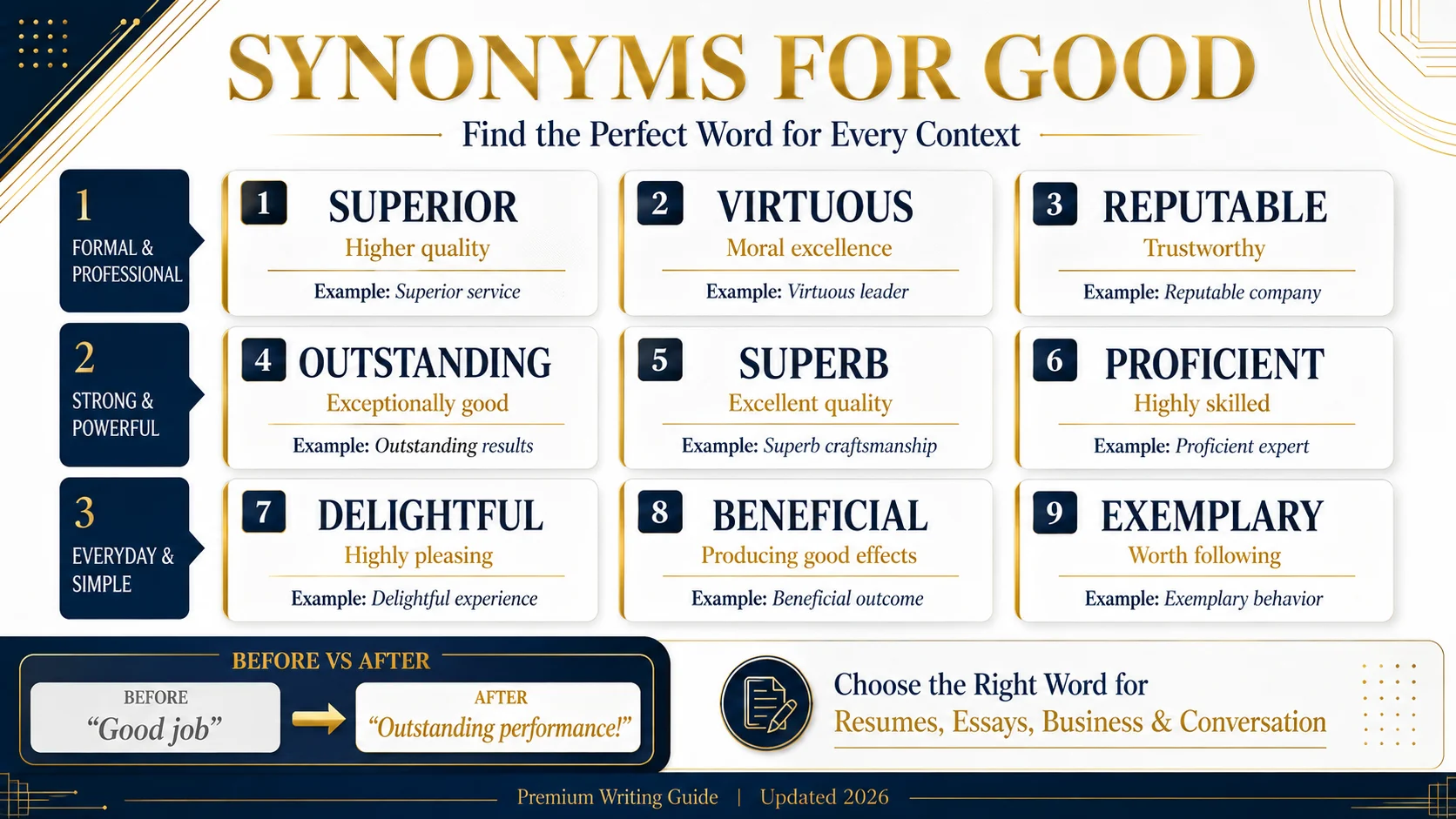
The English language offers hundreds of synonyms for “good,” each with a slightly different shade of meaning. Some of the most common and powerful replacements include excellent, superior, virtuous, beneficial, and delightful . The best choice depends entirely on your context whether you’re describing someone’s character, the quality of a product, or the taste of a meal. This guide will help you select the perfect word for any situation.
What Does Good Mean?
Definition
At its core, “good” is an adjective meaning possessing desirable qualities, being morally excellent, or promoting success and well-being . But its true versatility lies in its many shades of meaning. Webster’s Dictionary defines it as “adapted to answer the end designed; promoting success, welfare, or happiness; serviceable; useful; fit; excellent; admirable” . The word can describe everything from a person’s character to the quality of a meal to the effectiveness of a tool.
Common Uses
“Good” appears in countless everyday situations:
- Character: “She is a good person” (virtuous, kind)
- Quality: “This is a good restaurant” (high-quality, excellent)
- Skill: “He is a good writer” (skilled, proficient)
- Health: “I feel good” (well, healthy)
- Suitability: “This is a good time to call” (opportune, right)
Best Synonyms for Good
| Synonym | Meaning | Best Used When | Example |
|---|---|---|---|
| Superb | Extremely excellent, impressive | Describing food, performance, or quality | “The chef prepared a superb meal.” |
| Superior | Higher in quality or rank | Comparing options, highlighting standout value | “These tires are superior to the standard model.” |
| Virtuous | Having high moral standards | Describing a person’s character in formal context | “He is a virtuous leader who always does the right thing.” |
| Beneficial | Producing good effects or results | Emphasizing positive outcomes | “Regular exercise is beneficial for overall health.” |
| Delightful | Highly pleasing, charming | Describing experiences that bring joy | “We had a delightful evening at the theater.” |
| Proficient | Competent and skilled | Assessing someone’s abilities or performance | “She is a proficient project manager.” |
| Outstanding | Exceptionally good, excellent | Giving high praise, formal recognition | “His performance was outstanding.” |
| Reputable | Having a good reputation, respected | Describing companies, institutions, people | “We only work with reputable suppliers.” |
Synonyms by Context
Formal Writing
- Virtuous: Describes moral excellence with dignity
- Exemplary: Sets a standard worth following
- Estimable: Worthy of respect and admiration
Professional Writing
- Superior: Highlights superior quality or value
- Proficient: Emphasizes skill and expertise
- Reputable: Signals trustworthiness and respect
Academic Writing
- Beneficial: Focuses on positive effects and outcomes
- Significant: Emphasizes importance or impact
- Effective: Highlights practical success or utility
Daily Conversation
- Awesome: Informal, enthusiastic praise
- Delightful: Warm, positive description of experiences
- Fine: Acceptable but not spectacular
Professional Alternatives for Good
| Word | Best For | Example |
|---|---|---|
| Superior | Business proposals, marketing | “Our superior customer service sets us apart.” |
| Outstanding | Performance reviews, resumes | “She has made outstanding contributions to the team.” |
| Proficient | Skills assessment, resumes | “I am proficient in multiple programming languages.” |
| Beneficial | Strategic recommendations | “This partnership will be highly beneficial.” |
| Reputable | Company profiles, recommendations | “We partner only with reputable organizations.” |
| Constructive | Feedback, collaborative situations | “Thank you for your constructive feedback.” |
Simple Alternatives for Good
| Word | Example |
|---|---|
| Fine | This is a fine example of our work.” |
| Great | “We had a great meeting today.” |
| Nice | “She did a nice job on the presentation.” |
| Okay | “His performance was okay, but he can improve.” |
| Decent | “They offer decent service for the price.” |
Stronger Alternatives for Good
| Word | Meaning | Example |
|---|---|---|
| Superb | Excellent, high quality | “The team delivered a superb product.” |
| Outstanding | Exceptionally good | “Her leadership is outstanding.” |
| Exceptional | Unusually excellent | “He shows exceptional dedication.” |
| Remarkable | Worth noticing, unusual | “This is a remarkable achievement.” |
| Supreme | Highest possible quality | “She has supreme confidence in her abilities.” |
Difference Between Similar Synonyms
Superior vs. Superb:
- Superior compares one thing to another (this is better than that)
- Superb describes something excellent in itself (this is simply excellent)
Virtuous vs. Beneficial:
- Virtuous relates to personal morality and character
- Beneficial relates to outcomes and positive effects
Excellent vs. Outstanding:
- Excellent means “of very high quality” in general
- Outstanding means “so good it stands out from the rest”
Opposite Words
- Bad – The direct opposite of good in most contexts
- Evil – Opposed to good in moral contexts
- Poor – Opposed to good in quality
- Inadequate – Opposed to good in meeting standards
- Harmful – Opposite of beneficial
FAQs
What is the most common synonym for good?
Great, excellent, and fine are among the most frequently used alternatives in daily conversation .
What is a formal synonym for good?
Virtuous, estimable, and exemplary are excellent formal choices .
What is the strongest synonym for good?
Superb, outstanding, and superior are powerful alternatives that elevate the meaning significantly .
What word can replace good in a resume?
Proficient, outstanding, and exceptional are professional alternatives that strengthen resumes .
Conclusion
“Good” is a versatile word, but precise vocabulary elevates your writing. The right synonym can transform “good job” into an “outstanding performance” or “good person” into a “virtuous leader.” Whether you’re writing for business, academics, or daily conversation, choosing the perfect word enhances clarity, credibility, and impact. Bookmark this guide and expand your vocabulary one word at a time.

Harry Edwards is a language writer specializing in word meanings, synonyms, and language usage. He creates clear, accurate, and engaging content to help readers improve their vocabulary and communication skills.