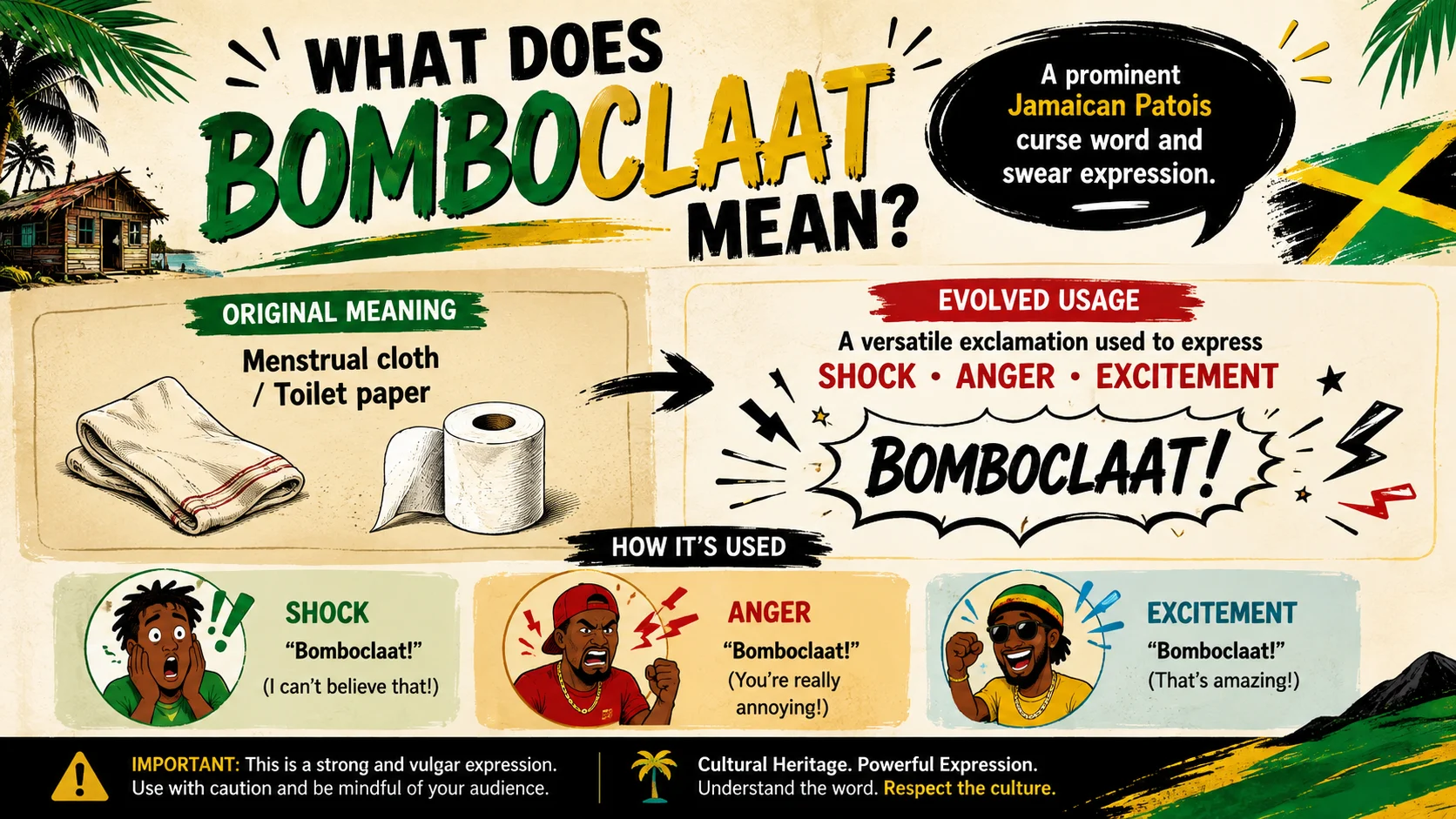
What does bomboclaat mean? It is a prominent Jamaican Patois curse word and swear expression. Originally referring to menstrual cloth or toilet paper, it evolved into a versatile exclamation of shock, anger, or excitement.
What does bomboclaat mean in the rich tapestry of Jamaican patois and global internet culture? However, Caribbean slang frequently crosses over into mainstream social media, so understanding its roots remains essential for digital literacy. Consequently, users often encounter this potent expression across platforms like X, TikTok, and Instagram memes. For instance, internet users drop the term as a caption for relatable, chaotic, or shocking images. Therefore, exploring this cultural term helps you navigate online spaces with greater awareness. Furthermore, examining its linguistic background ensures you understand the difference between its original meaning and its meme usage. Ultimately, this guide breaks down the true definition, history, and cultural sensitivity surrounding the phrase.
Quick Answer Box
| Meaning | Context | Primary Platforms | Example | Tone |
| Expletive / Shock | Expressing anger, surprise, or as a meme | X, TikTok, Instagram | Bomboclaat, look at this mess! | Intense, Informal |
What Does Bomboclaat Mean?
What does bomboclaat mean regarding its literal translation and linguistic roots in Jamaica? Etymologically, the compound word combines “bombo” (referring to a bottom, backside, or cloth) and “claat” (cloth). Historically, it translates directly to a vulgar term for menstrual rags or toilet paper. Because of this graphic origin, it functions as a severe curse word or swear phrase within traditional Jamaican Patois. For generations, Jamaicans used the expression primarily to voice intense anger, extreme disgust, or profound shock. Therefore, treating it lightly requires caution, as it carries heavy weight in Caribbean culture compared to casual English slang.
Contextual Dynamics & Nuances of the Term
The usage of bomboclaat splits dramatically between traditional Caribbean communication and modern global internet meme culture. For native speakers in Jamaica or the diaspora, it remains a serious profanity used during moments of high emotion. Meanwhile, international social media users frequently misinterpret or misuse the term as a general caption for funny situations. For example, meme creators on X often paste the word over before-and-after comparison images to signal sudden chaos. Consequently, this disconnect between cultural heritage and viral internet trends creates significant debate among online communities. Understanding this nuance prevents unintentional disrespect when viewing or sharing digital content.
Real-Life Conversation Examples Using the Term
Examining authentic dialogue helps clarify how the expression functions in actual communication settings. Therefore, review these five distinct scenarios to observe how people deploy the term across different contexts.
Script One: Traditional Exclamation of Surprise
- Marcus: Bomboclaat! Did you see how fast that car just sped past us?
- Devon: Man, I thought for sure he was going to crash into the median.
- Marcus: That was entirely too close for comfort.
Script Two: Expressing Frustration Over a Breakdown
- Tanya: The kitchen sink pipe just burst completely open under the cabinet.
- Kevon: Bomboclaat! Grab every towel we own from the linen closet right now.
- Tanya: I am already on it, hand me that bucket quickly.
Script Three: Internet Meme Captioning
- Jada: Why does your latest post have bomboclaat written as the main header?
- Malik: It is a trending format for showing a chaotic morning commute.
- Jada: People online use that word for everything nowadays.
Script Four: Authentic Cultural Exchange
- Nia: Is it okay to use that word in casual text messages with friends?
- Rohan: Honestly, it is a heavy curse word in Jamaica, so it is better avoided unless you know the culture.
- Nia: Good to know, I will stick to standard English expressions.
Script Five: Reaction to Sudden Bad News
- Zack: The flight to Kingston just got canceled due to severe weather.
- Ray: Bomboclaat! We planned this entire vacation for six months.
- Zack: Let us head back to the ticket counter to find another route.
Platform-Specific Breakdown
How It Is Used on X (Formerly Twitter)
X serves as the primary launchpad for the word’s transformation into a viral meme format. Users famously paired the term with images to represent a sudden twist or chaotic realization. Although the trend peaked around 2019, variations of the meme format continue to surface in niche online feeds. Consequently, many international users learned the vocabulary word entirely through these viral digital templates without knowing its actual definition.
The Role of the Term on TikTok
TikTok creators frequently use audio clips and text overlays featuring Caribbean slang to soundtrack comedic skits. However, creators occasionally misuse the vocabulary due to a lack of awareness regarding its vulgar origins. Therefore, cultural educators on the platform frequently post reminder videos explaining the true linguistic weight of the expression.
Instagram and Global Texting Dynamics
Instagram captions and direct messages adopt the term primarily for dramatic effect or shock value. Meanwhile, standard texting among peers relies heavily on digital shorthand rather than heavy expletives. Because visual platforms amplify fast-moving trends, words travel across global borders long before users grasp their full cultural context.
Alternative Meanings & NLP Variations of the Phrase
While the core definition remains tied to Jamaican Patois, alternative spellings frequently appear across digital search engines. For instance, users often type variants like bomboclat, bumbaclot, or bomboclath depending on phonetic spelling habits. Furthermore, natural language processing models group these variations together, recognizing that they all point toward the same Caribbean root word. Additionally, related patois curses like bloodclaat or rathid often accompany the term in traditional Jamaican speech.
Misinterpretations: When NOT to Use the Term
Using heavy cultural profanity requires strict awareness of setting, audience, and cultural background. For example, you should never use this expression in professional workplaces, academic settings, or formal writing. Doing so demonstrates poor judgment and disrespects cultural norms. Furthermore, using the word casually around native Jamaicans who view it as a serious curse can cause offense. Therefore, respecting the gravity of the term means refraining from using it as a casual internet buzzword.
How to Respond in Chat Comfortably
Encountering the term in an online discussion or meme requires understanding the context of the message. If someone uses it in a traditional Caribbean conversation to express frustration, acknowledging their surprise or offering support is appropriate. Conversely, if you see it misused in a confusing internet meme, no direct response is usually necessary. Moreover, avoiding the use of the term in your own vocabulary prevents cultural missteps. Therefore, listening and observing rather than mimicking ensures respectful digital interactions.
FAQs
Is the word considered a bad curse?
Yes, it functions as a strong profanity and swear word within traditional Jamaican Patois.
What is the literal translation of the term?
The expression translates literally to a vulgar term for menstrual cloth or toilet paper.
Why do internet users type it on images?
It became a viral meme format on social media platforms to signify sudden shock or chaos.
Can I use the term in professional settings?
Never use this word in professional, academic, or formal communication environments.
Are there alternative spellings for the word?
Yes, users frequently spell it as bumbaclot, bomboclat, or bomboclath online.
Is the term unique to Jamaica?
The phrase originates directly from Jamaican culture and patois linguistic traditions.
How do native speakers view its online meme use?
Many native speakers express frustration when international users trivialize a heavy curse word into a funny meme.
What are similar patois curse words?
Similar expressions include bloodclaat, steenki-claat, and pussama-claat.
Is the word safe for younger audiences?
No, due to its graphic literal origins and profanity status, it is unsuitable for children.
Why did the term go viral globally?
Social media algorithms and meme culture accelerated its spread across international user bases.
Conclusion
Caribbean patois and global internet culture intersect continuously as digital platforms connect users across the globe. Although viral trends often strip words of their original cultural weight, understanding true meanings preserves linguistic respect. Consequently, educating yourself on historical origins prevents accidental misuse in public forums. Furthermore, balancing internet humor with cultural awareness ensures positive interactions across international digital landscapes. Ultimately, recognizing the depth behind everyday slang makes you a more informed and empathetic global citizen.