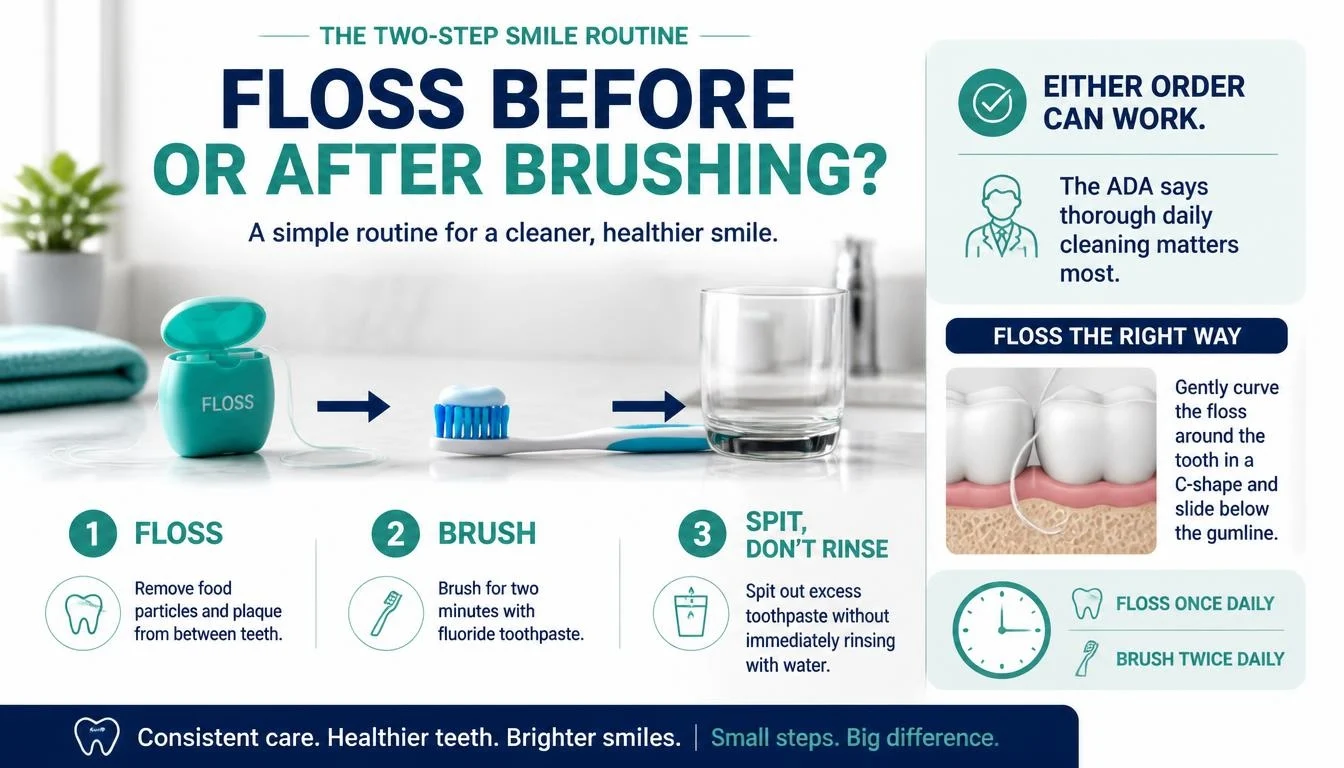
You can floss before or after brushing your teeth, but flossing before brushing is a practical choice because it loosens food particles and plaque between your teeth before you brush. The American Dental Association (ADA) says either order is acceptable as long as you clean thoroughly. For healthy teeth and gums, brush twice daily with fluoride toothpaste and clean between your teeth once a day.
Should you floss before or after brushing? If you’ve ever wondered about the correct order of your oral hygiene routine, you’re not alone. Many people brush their teeth first and floss afterward, while others prefer to remove trapped food and plaque before picking up their toothbrush. Fortunately, both approaches can work when you clean your teeth properly and consistently.
However, the order can influence how you organize your routine. Flossing first helps loosen debris between your teeth, while brushing afterward cleans the tooth surfaces and allows fluoride toothpaste to reach your mouth. The NHS recommends flossing before brushing, although the American Dental Association explains that either sequence is acceptable.
Beyond choosing the right order, it’s important to understand how often you should floss, which products you can use, and how to clean between your teeth without irritating your gums. After all, brushing alone cannot effectively reach every tight space between your teeth.
In this guide, you’ll discover whether you should floss before or after brushing, the benefits of each approach, the correct flossing technique, common mistakes, and answers to frequently asked questions. By the end, you’ll have a simple routine that supports healthier teeth and gums.
Should You Floss Before or After Brushing?
| Question | Answer |
|---|---|
| Which should come first? | Flossing before brushing is a practical routine. |
| Is flossing after brushing wrong? | No. The ADA accepts either order when cleaning is thorough. |
| How often should you floss? | Once a day is the general recommendation. |
| How often should you brush? | Twice a day for about two minutes with fluoride toothpaste. |
| Should you rinse after brushing? | Spit out excess toothpaste without immediately rinsing with water. |
| What if your gums bleed? | Use gentle technique and seek dental advice if bleeding persists or recurs. |
Should You Floss Before or After Brushing?
The short answer is that you can do either, but flossing before brushing is a sensible daily habit.
When you floss first, you remove food particles and loosen plaque from spaces that your toothbrush bristles may not reach. Then, brushing helps clean the accessible tooth surfaces and removes some of the debris released during flossing.
This sequence is also consistent with guidance from the NHS, which recommends flossing before brushing. Nevertheless, the ADA states that brushing first is also acceptable if you floss thoroughly.
Therefore, don’t worry if you’ve always flossed after brushing. You don’t need to abandon a consistent routine simply because you learned about a different order.
The most important priorities are:
- Brush your teeth twice a day with fluoride toothpaste.
- Clean between your teeth daily using floss or another suitable interdental cleaner.
- Use gentle, effective techniques instead of rushing.
- Follow your dentist’s advice if you have specific oral health concerns.
Ultimately, the best routine is one you can perform correctly every day.
Why Is Flossing Before Brushing a Good Choice?
Flossing before brushing offers several practical advantages. Although it isn’t the only acceptable sequence, it can make your daily oral hygiene routine easier to follow.
1. It Removes Food Particles Between Teeth
Food can become trapped in narrow spaces that toothbrush bristles cannot clean effectively. Floss reaches these areas and helps dislodge food before you brush.
For example, if spinach or meat gets stuck between your molars after dinner, flossing first can loosen those particles. You can then brush your teeth to complete your routine.
2. It Helps Remove Plaque From Hidden Areas
Plaque is a sticky film of bacteria that forms on teeth. When you fail to remove it regularly, it can contribute to tooth decay and gum inflammation.
Flossing helps clean the sides of neighboring teeth and the areas near the gumline. Consequently, adding interdental cleaning to brushing can help maintain better oral hygiene than relying on a toothbrush alone.
3. It Creates a Simple, Repeatable Routine
Another benefit is that flossing first gives your routine a clear sequence: clean between your teeth, brush, and spit out the excess toothpaste.
This approach can help you remember both steps, especially when you’re tired at night. In addition, completing the harder-to-remember step first may make it less likely that you skip flossing altogether.
4. It Helps You Finish With Fluoride Toothpaste
After flossing, brushing with fluoride toothpaste cleans your teeth and delivers fluoride, which helps strengthen enamel and prevent cavities.
However, the benefit doesn’t mean that flossing after brushing makes your routine ineffective. The ADA accepts either order, so consistency and proper technique remain essential.
Is It Bad to Floss After Brushing?
No. Flossing after brushing is not inherently bad for your teeth or gums.
If you brush first and floss afterward, you can still remove food particles and plaque from between your teeth. The important thing is to clean those spaces thoroughly rather than leaving them untouched.
Some people prefer brushing first because it feels natural or fits their established routine. Others find that flossing afterward helps them identify areas where food remains trapped.
For example, imagine that you brush your teeth every morning and floss immediately afterward. If you use floss correctly and clean between all your teeth, you don’t need to assume that your routine is harmful.
Still, if you are building a new habit, consider flossing first and brushing afterward. This sequence follows NHS guidance and provides a straightforward routine to remember.
Remember: A consistent, thorough routine is more important than worrying about a small difference in order.
What Happens If You Never Floss?
Brushing is essential, but it doesn’t clean every surface of your teeth equally well. The spaces between neighboring teeth can retain food debris and plaque, particularly where the teeth touch.
When plaque accumulates, it can contribute to several oral health problems.
Plaque Buildup
Plaque contains bacteria that can produce acids when they break down sugars in your mouth. These acids can weaken tooth enamel and contribute to cavities.
Daily interdental cleaning helps remove plaque from areas that a toothbrush may miss.
Gum Inflammation
Plaque near the gumline can irritate the gums and contribute to gingivitis, an early stage of gum disease.
Signs may include redness, swelling, tenderness, or bleeding during brushing and flossing. If these symptoms persist, a dental professional can evaluate the cause.
Bad Breath
Food debris and bacteria can contribute to unpleasant breath. Cleaning between your teeth helps remove some of the material that may otherwise remain trapped.
However, persistent bad breath can have other causes, including gum disease, dry mouth, or certain medical conditions.
Increased Risk of Dental Problems
When you regularly miss the spaces between your teeth, you leave areas where plaque can accumulate. Over time, this may contribute to decay between teeth and gum problems.
Nevertheless, flossing does not replace professional dental examinations or treatment. Your dentist can identify problems that home care alone cannot resolve.
How to Floss Before Brushing Correctly
Good technique matters more than simply moving a piece of floss between your teeth. Follow these steps to clean effectively without unnecessarily irritating your gums.
Step 1: Choose the Right Floss
Select dental floss or dental tape that feels comfortable between your teeth. Waxed floss may slide more easily through tight spaces, while tape can feel more comfortable for some people.
If you have braces, bridges, implants, or limited hand movement, a floss threader, interdental brush, or water flosser may be more convenient. Ask your dentist which option suits your mouth.
Step 2: Use Enough Floss
Cut approximately 18 inches of floss, or about 45 centimeters. Wrap most of it around the middle finger of one hand and the remaining portion around the middle finger of the other hand.
Leave a short section stretched between your fingers so you can guide it accurately.
Step 3: Guide It Between Your Teeth
Gently move the floss back and forth to pass through the contact point between two teeth. Avoid snapping it down into your gums, as this can cause pain or tissue damage.
If the floss feels difficult to insert, slow down and guide it carefully.
Step 4: Curve the Floss Around Each Tooth
Once the floss reaches the gumline, curve it into a C-shape around one tooth.
Gently slide it up and down along the tooth’s side, reaching slightly beneath the gumline without forcing it. Repeat the movement against the neighboring tooth.
Step 5: Clean Every Tooth
Move to a clean section of floss as you progress through your mouth. Make sure you clean between every pair of teeth, including the back surfaces of your last molars where accessible.
Don’t forget the spaces that rarely trap food. Plaque can accumulate there even when you don’t notice anything stuck.
Step 6: Brush for Two Minutes
After flossing, brush your teeth with fluoride toothpaste for about two minutes. Use a soft-bristled toothbrush and clean the outer, inner, and chewing surfaces.
Brush gently along the gumline instead of scrubbing aggressively.
Step 7: Spit, Don’t Immediately Rinse
After brushing, spit out the excess toothpaste. Avoid immediately rinsing your mouth with water because doing so washes away some of the fluoride left behind.
If you use fluoride mouthwash, consider using it at a different time of day rather than immediately after brushing.
Should You Floss Before or After Brushing at Night?
Flossing before brushing at night is a convenient option because it helps remove food particles and plaque before your final brushing session.
A simple evening routine looks like this:
- Floss between all your teeth.
- Brush for two minutes using fluoride toothpaste.
- Spit out the excess toothpaste without immediately rinsing.
- Avoid eating afterward, apart from drinking plain water as needed.
Nighttime brushing is particularly important because it removes plaque and food debris before you sleep.
If you’re too tired to floss at bedtime, choose another reliable time. For instance, you could floss in the morning and brush afterward. The goal is to clean between your teeth once a day without repeatedly postponing the task.
Should You Floss Before or After Brushing in the Morning?
Either order can work in the morning, depending on your preferences and schedule.
For a simple routine, floss first, brush for two minutes, and spit out the excess toothpaste. This approach clears debris between teeth before you complete brushing.
However, if you already floss after brushing and consistently clean every space, there is no need to worry.
The more important issue is whether you clean your teeth twice daily and floss every day. A reliable morning routine can also make it easier to maintain the habit when your evenings become busy.
Does Flossing Order Affect Fluoride Protection?
Fluoride helps strengthen tooth enamel and makes teeth more resistant to acid attacks that cause cavities.
Some research suggests that flossing before brushing may improve plaque removal between teeth and leave more fluoride in the mouth after brushing. However, the ADA does not consider one sequence mandatory for everyone.
Therefore, it is reasonable to floss first and brush afterward, but you should not assume that brushing first prevents fluoride from working.
To support fluoride protection:
- Use fluoride toothpaste appropriate for your age and dental needs.
- Brush for about two minutes twice daily.
- Spit out excess toothpaste instead of immediately rinsing with water.
- Follow your dentist’s advice if you have a high risk of cavities.
These habits matter more than stressing over whether you completed one step in the opposite order.
Flossing vs. Brushing: What’s the Difference?
Brushing and flossing serve different purposes. Neither one completely replaces the other.
| Feature | Brushing | Flossing |
|---|---|---|
| Main purpose | Cleans accessible tooth surfaces | Cleans between neighboring teeth |
| Removes plaque | Yes | Yes, from interdental areas |
| Helps prevent cavities | Yes, especially with fluoride toothpaste | Supports prevention by cleaning between teeth |
| Supports gum health | Yes | Yes |
| Recommended frequency | Twice daily | Once daily |
| Typical duration | About two minutes per session | Enough time to clean every interdental space carefully |
Together, these habits provide more complete daily cleaning than brushing alone.
What Should You Use: Dental Floss, Floss Picks, or a Water Flosser?
The best interdental cleaner depends on your teeth, dental work, dexterity, and personal preferences.
Traditional Dental Floss
Traditional floss is a thin strand that you guide between teeth. It works well for many people with tight spaces and gives you control over how you clean each tooth.
However, it may take practice to use comfortably.
Floss Picks
Floss picks hold a short piece of floss on a handle. They can make cleaning between teeth easier if you struggle to wrap floss around your fingers.
Nevertheless, use them carefully and clean every space. Follow the product instructions, and don’t force the pick between tight teeth.
Water Flossers
Water flossers use a stream of water to help remove food debris and plaque around the gumline and between teeth. They can be useful for people with braces, bridges, implants, or difficulty handling traditional floss.
However, they require the correct technique, and suitability varies by individual. Ask your dentist whether a water flosser can meet your specific cleaning needs.
Interdental Brushes
Small interdental brushes clean between teeth where there is enough space for the brush to fit comfortably. They can be particularly useful when gaps are wider or when a dental professional recommends them.
Choose the correct size. Never force a brush into a space that is too tight.
Common Flossing Mistakes to Avoid
Even people who floss regularly can make mistakes that reduce the effectiveness of their routine.
1. Snapping Floss Into the Gums
Pushing floss down too forcefully can irritate or injure gum tissue. Instead, use gentle back-and-forth movements to guide it between your teeth.
2. Cleaning Only Where Food Gets Stuck
Flossing is not just for removing visible food. Plaque can build up between teeth even when nothing feels trapped, so clean every accessible space daily.
3. Moving the Floss Only Horizontally
Simply sliding floss back and forth may not clean the tooth surfaces thoroughly. Curve it around each tooth and gently move it up and down.
4. Reusing the Same Piece Indefinitely
Used floss can become worn or frayed and may transfer debris between areas. Use a clean section as you progress, and discard disposable floss after use.
5. Brushing Too Hard
Aggressive brushing can irritate the gums and contribute to tooth wear. Choose a soft-bristled brush and use gentle pressure.
6. Skipping Flossing Because Your Gums Bleed
Bleeding may occur when gums are inflamed or when your technique is too forceful. Clean gently, but don’t ignore recurring bleeding.
If bleeding continues, becomes heavy, or occurs alongside swelling or pain, arrange a dental appointment. A dentist can determine whether gum disease or another problem is responsible.
7. Rinsing Immediately After Brushing
Rinsing with water straight after brushing removes some of the concentrated fluoride remaining on your teeth. Instead, spit out excess toothpaste and follow your dentist’s instructions.
8. Treating Flossing as a Substitute for Dental Visits
Daily flossing supports oral health, but it cannot remove hardened tartar or diagnose cavities. Continue attending dental appointments at the intervals recommended for you.
Does Flossing Cause Gaps Between Teeth?
Proper flossing does not normally create gaps between healthy teeth.
Sometimes, people notice spaces after removing plaque or tartar that had accumulated near the gums. In other cases, gum recession or changes in the supporting tissues may explain newly visible gaps.
Aggressive flossing can injure gum tissue, so use gentle movements rather than forcing floss into tight spaces.
If you notice a new gap, loose tooth, gum recession, or persistent discomfort, consult a dentist instead of assuming flossing caused the change.
Should Children Floss Before or After Brushing?
Children can benefit from cleaning between their teeth when neighboring teeth touch and a toothbrush cannot reach the spaces effectively.
Parents or caregivers should help children learn proper technique and supervise them according to their age and coordination. Flossing before brushing is a convenient sequence, but either order can work when both steps are completed thoroughly.
For younger children, an adult may need to perform the flossing to prevent accidental injury. Ask a pediatric dentist when to begin and which tool is appropriate.
In addition, choose toothpaste and use an amount suitable for the child’s age, following professional guidance.
What If You Have Braces, Crowns, or Dental Implants?
Dental work can make cleaning between teeth more challenging, but it does not remove the need for interdental cleaning.
Braces
Food and plaque can collect around brackets and wires. Floss threaders, orthodontic floss, interdental brushes, and water flossers may help you reach these areas.
Your orthodontist can demonstrate a safe technique for your specific appliances.
Crowns and Bridges
Clean around the edges of crowns and use suitable tools to clean beneath bridges. Special floss threaders or interdental cleaners may be necessary.
Avoid forcing ordinary floss into areas where it can become trapped or damage dental work.
Dental Implants
Careful cleaning around implants helps maintain the health of the surrounding gums. Use products recommended by your dentist, since the best approach depends on the implant design and the surrounding spaces.
If you’re unsure which tool to choose, request a demonstration at your next dental appointment.
Benefits of a Consistent Flossing Routine
Flossing is a small daily task, but it supports several aspects of oral hygiene.
- Removes interdental debris: Helps clear food particles from spaces a toothbrush may miss.
- Reduces plaque accumulation: Cleans tooth surfaces between neighboring teeth.
- Supports healthier gums: Helps remove plaque associated with gum inflammation.
- Helps prevent bad breath: Removes some trapped food and bacterial buildup.
- Complements brushing: Makes your cleaning routine more complete.
- Encourages preventive care: Helps you build a daily habit that supports long-term oral health.
However, flossing does not guarantee that you will never develop cavities or gum disease. Diet, saliva, genetics, dental anatomy, medications, and other factors can also influence oral health.
Advantages and Disadvantages of Flossing Before Brushing
Advantages
- Creates a clear, easy-to-remember routine.
- Loosens debris before brushing.
- Follows NHS guidance for cleaning between teeth.
- Helps you finish with fluoride toothpaste.
- May make daily flossing easier to remember.
Disadvantages
- Some people may find it less convenient than their existing routine.
- Traditional floss can require practice and manual dexterity.
- Flossing first does not guarantee better results if the technique is poor.
- People with braces or complex dental work may need special tools.
Overall, flossing before brushing is a practical choice, but it is not a strict requirement under ADA guidance.
Advantages and Disadvantages of Flossing After Brushing
Advantages
- Fits the routine of people who already brush first.
- Still removes plaque and food from between teeth when done correctly.
- May help some people remember to clean spaces they otherwise overlook.
Disadvantages
- Some people may skip flossing after they finish brushing.
- It does not follow the NHS’s preferred sequence.
- It can feel less convenient if you prefer to complete all interdental cleaning first.
Ultimately, either order is acceptable according to the ADA. Choose the sequence that allows you to clean thoroughly and consistently.
Related Questions: Brushing and Flossing
Should You Floss Before or After Mouthwash?
Mouthwash does not replace brushing or interdental cleaning. If you use fluoride mouthwash, avoid using it immediately after brushing because it may wash away the more concentrated fluoride from your toothpaste.
Instead, consider using mouthwash at another time, such as after lunch, and follow the product label or your dentist’s advice.
Should You Floss Before or After Breakfast?
You can floss before breakfast or later in the day. The most important point is to clean between your teeth once daily.
If you brush after breakfast, consider whether acidic foods or drinks are involved. Your dentist can advise you about timing if you have concerns about enamel erosion.
Should You Brush Before or After Eating?
For routine daily care, brush twice a day, including last thing before bed. If you’ve consumed acidic food or drinks, waiting before brushing may help reduce the risk of brushing softened enamel.
Rinse with water after acidic drinks and follow your dentist’s advice if you frequently experience acid exposure.
Should You Floss Every Time You Brush?
The general recommendation is to floss once a day, not necessarily every time you brush. Some people may need a different interdental cleaning routine based on their dental health.
Your dentist can recommend a schedule tailored to your needs.
Can You Floss Too Much?
Flossing once daily with proper technique is generally recommended. Repeatedly forcing floss between teeth or snapping it into the gums can cause irritation or injury.
If you feel pain every time you floss, ask your dentist to check your technique and the health of your gums.
Frequently Asked Questions
1. Is it better to floss before or after brushing?
Flossing before brushing is a practical option because it loosens food particles and plaque before you brush. However, the ADA says either order is acceptable when you clean thoroughly.
2. What is the correct order for brushing, flossing, and mouthwash?
A simple routine is to floss, brush with fluoride toothpaste, and spit out the excess toothpaste without immediately rinsing. If you use fluoride mouthwash, consider using it at another time of day.
3. Should I floss every day?
Yes. The ADA recommends cleaning between your teeth once a day with floss or another suitable interdental cleaner.
4. Can I skip flossing if I brush twice a day?
Brushing twice daily is essential, but toothbrush bristles may not effectively clean between tightly spaced teeth. Therefore, daily interdental cleaning remains an important part of oral hygiene.
5. Is it okay to floss only at night?
Yes. Nighttime is a convenient time for many people because they can clean between their teeth before their final brushing session. However, you can choose another time if it helps you maintain the habit.
6. Why do my gums bleed when I floss?
Bleeding can occur because of gum inflammation, improper technique, or irritation. Use gentle movements, and consult a dentist if bleeding persists or recurs.
7. Should I rinse my mouth after brushing?
Avoid rinsing immediately with water because it removes some of the fluoride left by toothpaste. Instead, spit out the excess toothpaste.
8. Can a water flosser replace traditional floss?
A water flosser can help clean between teeth and around dental work, but its suitability depends on your needs. Ask your dentist whether it provides an appropriate alternative for your mouth.
9. Does flossing help prevent cavities?
Flossing helps remove plaque and food from between teeth, supporting cavity prevention. However, it cannot eliminate all cavity risk, so brushing with fluoride toothpaste and regular dental care remain important.
10. Should I floss before or after brushing with an electric toothbrush?
Either order is acceptable. An electric toothbrush can clean tooth surfaces effectively when used correctly, but you still need to clean between your teeth.
11. Can I floss if I have sensitive gums?
You can often floss gently, but persistent pain, bleeding, or swelling should be evaluated by a dentist. You may also need a different tool or technique.
12. What happens if I forget to floss for one day?
Missing one day is not usually a reason to panic. Simply return to your regular routine and aim to clean between your teeth daily.
13. Should I use floss picks before or after brushing?
You can use floss picks before or after brushing. Choose the order that helps you clean all your interdental spaces carefully.
14. Is flossing more important than brushing?
Neither should replace the other. Brushing cleans accessible tooth surfaces and delivers fluoride, while flossing targets spaces between teeth.
15. How long should I wait between flossing and brushing?
You generally do not need to wait. You can floss and then brush immediately as part of the same routine.
Conclusion
So, should you floss before or after brushing? Flossing before brushing is a practical choice, especially if you want to remove food particles and plaque before completing your brushing routine. The NHS recommends this sequence, while the American Dental Association confirms that either order is acceptable when you clean thoroughly.
More importantly, make daily interdental cleaning a habit rather than focusing too much on the order. Brush twice a day for about two minutes with fluoride toothpaste, floss or use another suitable interdental cleaner once daily, and avoid immediately rinsing away the fluoride after brushing.
If you experience persistent gum bleeding, pain, swelling, or difficulty cleaning around dental work, consult your dentist for personalized guidance.
In the end, healthy teeth and gums depend on a consistent routine, proper technique, and regular professional dental care—not just whether you floss before or after brushing.