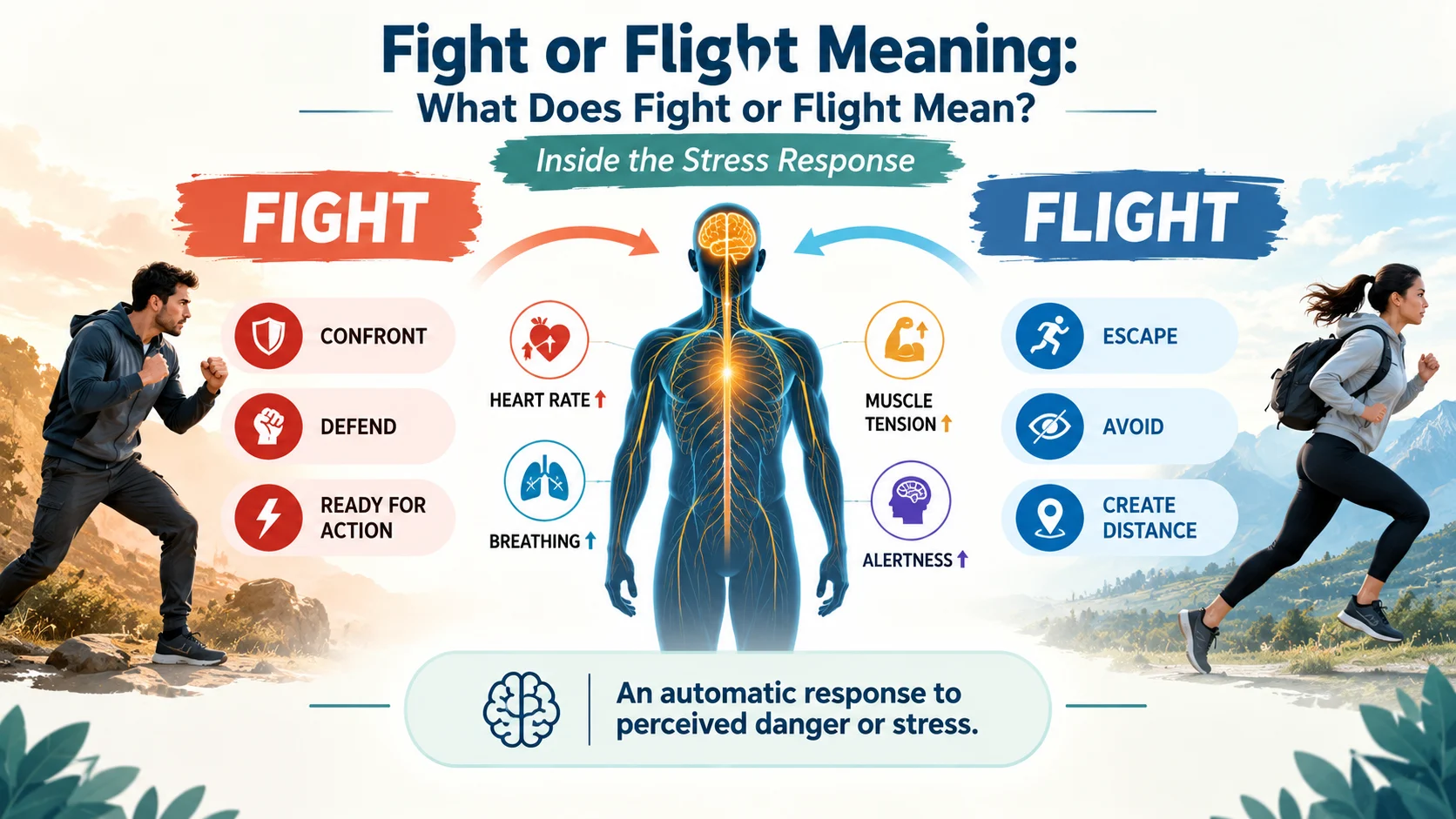
The fight or flight meaning refers to the body’s natural response to danger or stress. When a person feels threatened, the body prepares to either confront the threat (fight) or escape from it (flight). This automatic survival response helps people react quickly to stressful, frightening, or dangerous situations.
Have you ever felt your heart race, your palms sweat, or your breathing speed up when facing a stressful situation? These reactions are part of the fight or flight response, a natural survival mechanism that prepares your body to handle danger. Whether you face a sudden threat, a difficult conversation, or a nerve-racking moment, this response can influence how you react.
The term fight or flight describes two common ways the body responds to a perceived threat. You may feel ready to confront the situation, or you might want to escape from it. In addition, some people experience other reactions, such as freezing or becoming overwhelmed.
Understanding the fight or flight meaning can help you recognize your body’s stress signals and understand why certain situations trigger strong emotional or physical reactions. In this guide, you’ll learn how the response works, what causes it, explore everyday examples, and discover practical ways to manage stress more effectively.
What Does Fight or Flight Mean?
Fight or flight describes the body’s automatic response to a perceived threat or stressful situation. It prepares you to either confront the danger (fight) or escape from it (flight).
When this response activates, your body can release stress hormones such as adrenaline. Your heart rate may increase, your breathing can become faster, and your muscles become more ready for action.
For example, if you suddenly hear footsteps behind you at night, your body might immediately become alert. You may prepare to run, defend yourself, or quickly figure out whether there is actually a threat.
Importantly, the response doesn’t require a person to consciously choose it. Your brain can detect potential danger and trigger physical changes before you’ve fully processed what happened.
Fight or Flight Meaning
The phrase fight or flight refers to a built-in survival response that helps the body react quickly when it senses danger.
The two words describe two broad reactions:
- Fight: Confront or resist the perceived threat.
- Flight: Escape or move away from the perceived threat.
The response is closely associated with the body’s sympathetic nervous system. When activated, it helps prepare you for rapid physical action.
However, the phrase doesn’t only apply to physical danger. Stressful situations can also trigger similar reactions. A difficult confrontation, sudden shock, public speaking, or an intense argument may make your body feel as though it needs to respond immediately.
Therefore, someone might say:
“My fight or flight kicked in.”
In everyday conversation, that usually means the person experienced a strong automatic stress reaction.
Why Is It Called Fight or Flight?
The name comes from the two broad ways the body may respond to a perceived threat.
Fight
The fight response prepares you to confront the situation.
You might feel:
- Anger
- Tension
- Increased energy
- A strong urge to argue
- A desire to defend yourself
- Increased alertness
For example, someone insults you during an argument. Instead of walking away, you immediately feel the urge to confront them.
That reaction doesn’t necessarily mean you will become physically aggressive. Sometimes “fight” simply means becoming verbally defensive or strongly pushing back.
Flight
The flight response prepares you to escape.
You might experience:
- An urge to leave
- Restlessness
- Rapid breathing
- Increased alertness
- A desire to avoid the situation
- A sudden need to create distance
For instance, imagine walking into a room where you unexpectedly encounter something frightening. Your first instinct might be to turn around and leave.
That immediate urge represents the “flight” side of the response.
How Does the Fight or Flight Response Work?
The fight or flight response involves several parts of the nervous system working together.
Step 1: Your Brain Detects a Threat
First, your brain evaluates information from your surroundings.
The threat might be obvious, such as a car suddenly moving toward you. It can also be more subtle, such as hearing an unexpected noise.
Your brain doesn’t always wait for a detailed analysis before responding. When something appears dangerous, the body can react very quickly.
Step 2: The Stress Response Activates
Next, the sympathetic nervous system helps prepare your body for action.
Stress hormones, including adrenaline, play an important role in this process.
As a result, your body can become more alert and physically prepared.
Step 3: Your Body Changes
Your heart may beat faster. Your breathing may become quicker. Blood flow and muscle activity shift to support rapid action.
You may also sweat more and become intensely focused on what is happening.
These changes can feel uncomfortable, but they are part of the body’s attempt to protect you.
Step 4: The Threat Passes
Once your brain decides that the danger has ended, the body can gradually return toward its normal state.
Your breathing may slow. Your heart rate can decrease. Muscle tension may ease.
You might then notice how intense the reaction actually felt.
Common Fight or Flight Symptoms
A fight or flight reaction can produce noticeable physical and emotional changes.
Physical Symptoms
Common physical signs can include:
- Faster heartbeat
- Rapid breathing
- Sweating
- Muscle tension
- Shaking
- Dry mouth
- Increased alertness
- Feeling hot or flushed
- Stomach discomfort
- Feeling restless
Not everyone experiences the same combination of symptoms.
Emotional Symptoms
The emotional side can include:
- Fear
- Anger
- Panic
- Irritability
- Urgency
- Feeling overwhelmed
- Strong desire to escape
- Feeling intensely alert
Sometimes the emotional reaction appears before you understand why you’re feeling that way.
Fight or Flight Examples in Everyday Life
The phrase isn’t limited to emergencies. Similar stress reactions can happen during ordinary but intense situations.
Example 1: A Near Car Accident
You’re driving when another vehicle suddenly moves into your lane.
Immediately, your heart starts racing. You grip the steering wheel tightly and react quickly.
That’s a classic example of the body’s emergency stress response.
Example 2: A Difficult Argument
Someone confronts you unexpectedly.
Your body becomes tense, your heart beats faster, and you feel a strong urge to defend yourself.
In this case, your response may resemble the fight side.
Example 3: Public Speaking
You walk toward a stage to give a presentation.
Although you’re not physically in danger, your body reacts strongly. Your hands become sweaty, your heart races, and you want to escape.
That can resemble the flight response.
Example 4: Hearing a Strange Noise
You’re home alone at night when you hear a loud sound from another room.
Your attention immediately shifts toward the noise. Your muscles tense, and you prepare to investigate or leave.
Your body is essentially preparing for a possible threat before you know what caused the sound.
Fight or Flight in Relationships
The phrase can also describe reactions during emotionally intense interactions.
The Fight Pattern
A person may become defensive during conflict. They might argue, raise their voice, criticize, or feel compelled to prove their point.
The goal may not be to hurt someone. Instead, the reaction can come from feeling threatened or cornered.
The Flight Pattern
Another person may withdraw during conflict.
They might stop responding, leave the room, avoid the conversation, or suddenly need distance.
That behavior can resemble the flight response.
Why People React Differently
People don’t respond to stress in exactly the same way.
One person might become confrontational. Another might want to disappear from the situation.
Past experiences, personality, circumstances, and the perceived level of threat can all influence how someone reacts.
Therefore, a strong reaction doesn’t automatically mean someone is being unreasonable or dramatic.
Fight or Flight vs Freeze
Fight and flight aren’t the only possible responses to stress.
Some people experience a freeze response.
What Is the Freeze Response?
Freeze describes a reaction in which a person becomes temporarily unable to act or respond normally.
For example, someone might suddenly feel unable to speak during an overwhelming confrontation.
They may know they should respond, yet their mind seems blank.
Fight vs Flight vs Freeze
| Response | Typical Reaction |
|---|---|
| Fight | Confront the perceived threat |
| Flight | Escape or avoid the perceived threat |
| Freeze | Become temporarily unable to act |
| Fawn | Try to appease or please the perceived threat |
These terms describe broad stress reactions rather than rigid categories.
A person can also experience more than one reaction during the same situation.
What Is the Difference Between Fight or Flight and Anxiety?
Fight or flight and anxiety are related, but they aren’t identical.
Fight or Flight
Fight or flight is an automatic stress response that helps the body react to a perceived threat.
It can happen during a genuinely dangerous situation.
Anxiety
Anxiety involves fear, worry, or apprehension about possible danger or negative outcomes.
It can occur even when there is no immediate physical threat.
For example, your body may activate a stress response before an important exam even though you’re sitting safely in a classroom.
Therefore, someone can experience fight or flight sensations during anxiety without being in actual physical danger.
Can Stress Trigger Fight or Flight?
Yes. Stress can activate similar physiological responses, especially when the brain interprets a situation as threatening or overwhelming.
Physical Stress
A sudden accident, loud noise, or physical danger can produce an immediate reaction.
Emotional Stress
Arguments, relationship problems, work pressure, or social conflict can also create strong stress responses.
Performance Stress
Public speaking, interviews, exams, and competitions may trigger rapid heartbeat, sweating, or an urge to escape.
The body doesn’t always distinguish perfectly between physical danger and intense emotional pressure.
That is why you can experience very real physical sensations during situations that aren’t physically dangerous.
Why Does Your Heart Race During Fight or Flight?
Your heart rate can increase because the body is preparing for rapid action.
A faster heartbeat helps circulate blood more quickly throughout the body.
At the same time, breathing can become faster. Muscles become more prepared to move, and your attention can become highly focused.
These changes are useful during genuine emergencies.
However, they can feel uncomfortable when the trigger is emotional rather than physical.
For example, your heart may race before a presentation even though you’re simply standing in a classroom.
Why Do You Shake During Fight or Flight?
Shaking can happen when your body becomes highly activated.
Muscle tension increases during the stress response, and adrenaline can contribute to trembling or shaking.
You might notice shaky hands, trembling legs, or a general feeling of physical instability.
Although the sensation can be alarming, shaking can occur as part of an intense stress reaction.
Once the situation feels safer, the shaking often begins to settle.
Why Do You Sweat During Fight or Flight?
Sweating is another common stress response.
Your body can increase sweating when you become highly alert or physically activated. This response helps regulate body temperature and is part of the broader physiological reaction to stress.
That’s why your palms might become sweaty before an important interview or during a frightening experience.
In everyday language, you might describe this as being “in fight or flight mode.”
What Does “Fight or Flight Mode” Mean?
Fight or flight mode is an informal expression for being in a heightened state of stress or alertness.
Someone might say:
“My body went into fight or flight mode.”
They usually mean that something triggered a powerful automatic reaction.
The phrase appears frequently in conversations about anxiety, relationships, work stress, and emotional experiences.
For example:
“When my boss suddenly called me into the office, I went straight into fight or flight mode.”
Here, the speaker isn’t necessarily facing physical danger. Instead, they are describing a strong stress reaction.
Is Fight or Flight Always Bad?
No.
The fight or flight response exists because it can be useful.
When It Helps
During genuine danger, a rapid stress response can help you react quickly.
You may notice an approaching vehicle and immediately move out of the way. You may hear a warning and quickly leave a dangerous area.
In those moments, heightened alertness can be protective.
When It Becomes Uncomfortable
Problems can arise when the body repeatedly activates a strong stress response in situations that aren’t actually dangerous.
For example, someone might experience intense physical symptoms before routine social situations.
In that case, the reaction may feel disproportionate to the situation.
If these reactions happen frequently or interfere with daily life, talking with a qualified healthcare professional can be helpful.
How to Calm Fight or Flight
If you notice a strong stress reaction, several simple strategies may help your body settle.
Slow Your Breathing
Try taking slower, controlled breaths rather than repeatedly taking quick breaths.
A calm breathing pattern can help you focus on the present moment.
Ground Yourself
Pay attention to your surroundings.
You might notice five things you can see, four things you can touch, or other concrete details around you.
This can shift attention away from racing thoughts.
Relax Your Muscles
Notice where you’re holding tension.
Your shoulders, jaw, hands, and stomach may become tense during stress.
Gently relaxing those areas can help you feel more physically settled.
Move Your Body
Walking or engaging in gentle physical activity can help you manage built-up tension.
Choose something appropriate for your circumstances rather than forcing intense exercise when you’re already overwhelmed.
Remind Yourself of the Situation
Ask yourself:
“Am I actually in danger right now?”
If you’re safe, reminding yourself of that fact can help separate a stress sensation from an actual emergency.
However, don’t ignore genuine danger simply because you want to calm down.
Fight or Flight in Social Situations
Social situations can trigger powerful stress reactions.
Meeting new people, giving presentations, attending interviews, or entering unfamiliar environments can make some people feel highly alert.
Social Fight Response
Someone might become argumentative or defensive when they feel judged.
They may interrupt, challenge others, or become unusually confrontational.
Social Flight Response
Another person may avoid eye contact, leave early, decline invitations, or try to escape uncomfortable interactions.
Neither reaction automatically defines someone’s personality.
Instead, it can reflect how their body responds when they perceive social pressure or threat.
Fight or Flight in School and Work
Students and employees can experience this response during high-pressure situations.
Exams
An upcoming exam may cause a racing heart, sweaty palms, rapid breathing, or an urge to avoid studying altogether.
Job Interviews
A candidate might suddenly forget what they planned to say.
Their body may feel tense even though they prepared carefully.
Presentations
Standing in front of a group can create a strong urge to run away.
Once the presentation begins, however, the body may gradually settle.
These experiences demonstrate that fight or flight isn’t restricted to physical emergencies.
Common Misunderstandings About Fight or Flight
“Fight or Flight Means I’m Actually in Danger.”
Not always.
Your body can react to perceived danger even when the situation isn’t physically dangerous.
“Everyone Responds the Same Way.”
People react differently.
One person may confront a stressful situation, while another may withdraw or freeze.
“Flight Means I’m Weak.”
Not at all.
Moving away from danger can be an appropriate survival response.
In a genuinely dangerous situation, leaving quickly can be the smartest decision.
“Fight Means I’m an Aggressive Person.”
Not necessarily.
The fight response can involve defensiveness, assertiveness, irritation, or confrontation without physical aggression.
“I Can Just Turn It Off.”
The initial response is largely automatic.
However, learning how to recognize and regulate stress can help you respond more deliberately once you’re safe.
Fight or Flight vs Fight-or-Flight Response
These expressions usually refer to the same basic concept.
Fight or flight is the common phrase.
Fight-or-flight response is the more formal expression used when discussing the physiological stress reaction.
For example:
- “I went into fight or flight mode.”
- “The fight-or-flight response can increase heart rate.”
- “That situation triggered a fight or flight reaction.”
The exact wording changes, but the general idea remains the same.
How to Use “Fight or Flight” in a Sentence
Here are natural examples:
- “My fight or flight kicked in when I heard the crash.”
- “Public speaking puts me straight into fight or flight mode.”
- “I couldn’t think clearly because my fight or flight response was activated.”
- “Her first reaction during the argument was flight rather than fight.”
- “That sudden noise triggered a fight or flight reaction.”
- “Sometimes stress can make you feel stuck in fight or flight mode.”
- “I felt my heart racing as my body went into fight or flight.”
- “He tends to choose flight when conflicts become intense.”
These examples show that the phrase works in both everyday conversations and more serious discussions about stress.
Fight or Flight: Formal vs Informal Usage
| Usage | Example | Tone |
|---|---|---|
| Casual | “My fight or flight kicked in.” | Informal |
| Social | “That conversation put me in fight or flight mode.” | Casual |
| Educational | “The fight-or-flight response prepares the body for perceived danger.” | Formal |
| Workplace | “I experienced a strong stress response during the presentation.” | Professional |
| Personal | “I usually go into flight mode during conflict.” | Reflective |
The phrase is common in everyday language, especially online.
Still, if you’re writing academically or professionally, fight-or-flight response or stress response may sound more precise.
Related Terms You Should Know
Stress Response
A broad term for the body’s reaction to stressful situations.
Adrenaline
A hormone involved in the body’s rapid response to perceived danger or stress.
Sympathetic Nervous System
A part of the autonomic nervous system involved in activating the body during stress or emergencies.
Freeze Response
A reaction in which someone may temporarily feel unable to act or respond.
Fawn Response
An informal term used to describe attempts to appease or please someone perceived as threatening.
Hypervigilance
A state of heightened attention to possible threats.
These concepts overlap, but they aren’t interchangeable.
Frequently Asked Questions About Fight or Flight
What is the simple meaning of fight or flight?
Fight or flight means the body’s automatic reaction to a perceived threat. Fight involves confronting the threat, while flight involves escaping from it.
What does fight or flight feel like?
It can feel like a racing heart, rapid breathing, sweating, muscle tension, shaking, fear, anger, or a strong urge to escape or confront a situation.
Is fight or flight a mental disorder?
No. Fight or flight is a normal physiological stress response. However, frequent or severe stress reactions can occur alongside anxiety and other conditions.
Why do I feel fight or flight for no reason?
Sometimes the body reacts to stress before you’re consciously aware of what triggered it. However, recurring or severe symptoms should be discussed with a qualified healthcare professional.
What is the opposite of fight or flight?
There isn’t one simple opposite. The body’s relaxation response is often discussed as the counterpart to an activated stress response.
Is freeze part of fight or flight?
Freeze is often discussed alongside fight and flight as another possible response to perceived danger. It describes a state where someone may temporarily feel unable to act.
Can anxiety cause fight or flight?
Yes. Anxiety can activate physical sensations associated with the fight-or-flight response, even when there isn’t an immediate physical threat.
How long does fight or flight last?
The duration varies depending on the situation and individual. The body may begin settling once the perceived threat passes, although feelings of stress can sometimes linger.
Can you control fight or flight?
You usually can’t completely prevent the initial automatic response. However, breathing techniques, grounding, relaxation, and professional support can help you manage strong stress reactions.
Why does my body go into fight or flight during arguments?
Arguments can feel threatening to the brain even when there is no physical danger. Your body may respond with increased heart rate, muscle tension, anger, withdrawal, or an urge to escape.
Key Takeaways
- Fight or flight describes an automatic response to perceived danger or stress.
- Fight involves confronting or resisting a perceived threat.
- Flight involves escaping or moving away from it.
- The response can cause physical changes such as faster heartbeat, sweating, rapid breathing, and muscle tension.
- Stressful social, emotional, academic, or workplace situations can trigger similar reactions.
- Freeze is another possible response to overwhelming situations.
- Fight or flight isn’t automatically bad; it can help you respond quickly to genuine danger.
- Frequent or disruptive stress reactions may deserve professional attention.
- Simple strategies such as controlled breathing, grounding, and muscle relaxation may help you settle after a stress response.
Conclusion
The fight or flight response is one of the body’s automatic ways of dealing with perceived danger. When your brain senses a threat, your body can quickly become more alert and ready for action.
The “fight” side prepares you to confront or resist the situation, while the “flight” side prepares you to escape. However, people don’t always fit neatly into one category. Freeze and other stress reactions can also occur.
You may experience fight or flight during a genuine emergency, but the same physical sensations can appear during arguments, exams, interviews, public speaking, or intense anxiety. Therefore, feeling your heart race doesn’t automatically mean you’re in physical danger.
Understanding the response can make those sensations less confusing. Once you recognize what your body is doing, you can take a moment to assess the situation, determine whether you’re actually safe, and use healthy strategies to calm yourself.
Ultimately, fight or flight isn’t a sign of weakness or a character flaw. It’s a basic human stress response designed to help you deal with situations your brain perceives as threatening.