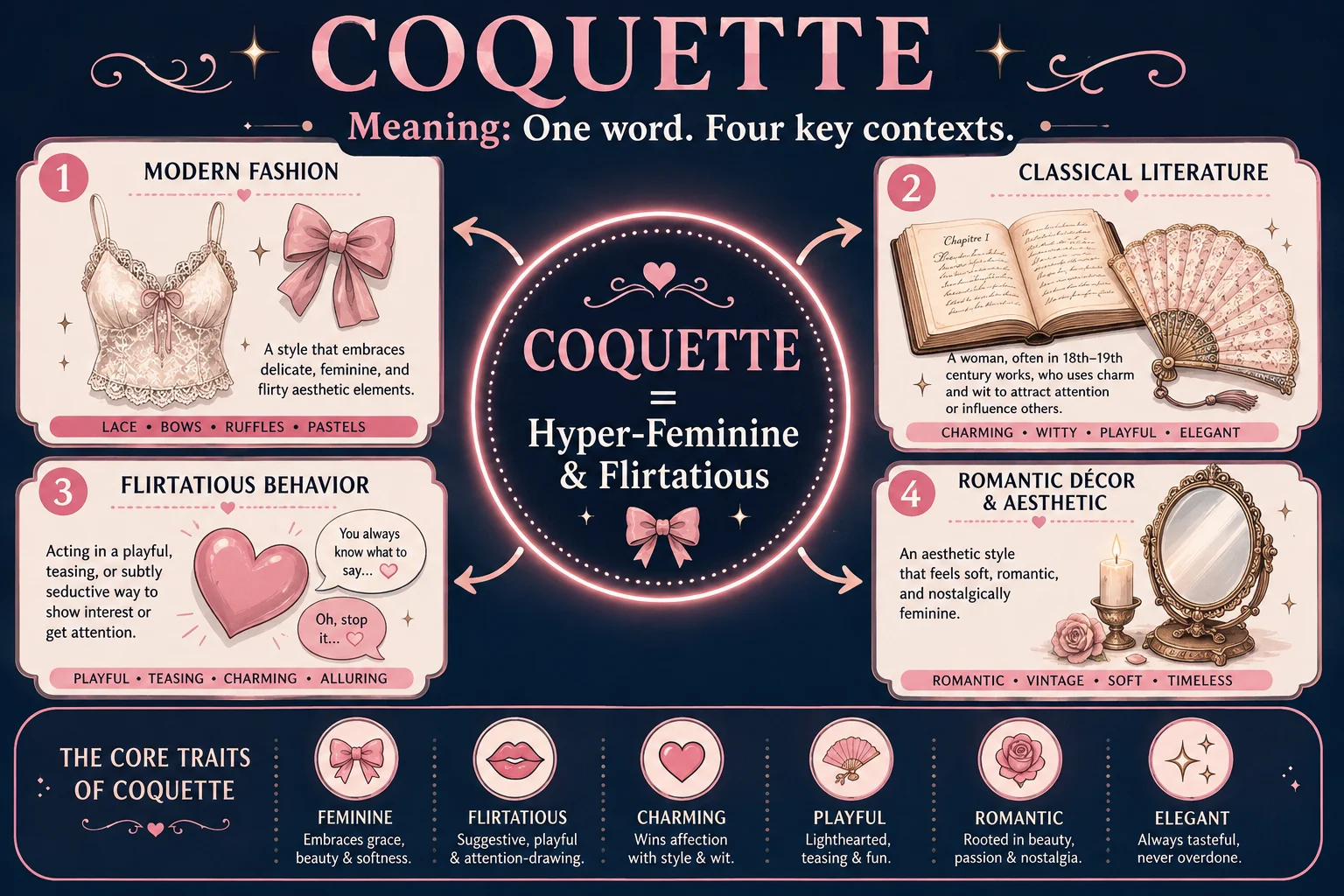
Coquette is traditionally defined as a woman who flirts playfully or teasingly without sincere affection. However, modern internet culture redefines the term as a hyper-feminine aesthetic characterized by pink bows, lace, vintage fashion, nostalgic romance, and playful charm.
Understanding what does coquette mean helps you navigate modern fashion trends, social media aesthetics, and historical literary references with complete clarity. Digital style subcultures evolve rapidly across platforms like TikTok, Pinterest, and Instagram. Furthermore, fashion terminology shortens complex cultural moods into memorable lifestyle labels. Modern internet users rely heavily on these stylistic terms to categorize visual aesthetics, clothing choices, and playful behavior. Consequently, mastering the exact definition prevents social confusion and enhances your cultural fluency.
Quick Summary
| Attribute | Details |
| Historical Definition | A playful, flirtatious woman who attracts attention without serious intent |
| Modern Aesthetic | Hyper-feminine style featuring bows, lace, pastels, and vintage romance |
| Primary Context | Fashion trends, TikTok aesthetics, literary characters, social media |
| Associated Icons | Pink ribbons, pearls, lace trim, floral prints, soft vintage lighting |
| Tone | Playful, charming, whimsical, romantic |
What Does Coquette Mean?
The exact phrase behind the word originates from the Old French word coquet, which translates directly to “a little cock” or a strutting rooster. In classical French, the word originally described a flirtatious man who strutted around to attract female attention. By the seventeenth century, however, the French language adapted the feminine noun form to describe a woman who uses charm, beauty, and playful teasing to gain admiration.
When someone uses this term in traditional literature, they describe a character who enjoys romantic attention without offering genuine emotional commitment in return. In addition, classical storytellers often used the persona as a dramatic archetype in plays, novels, and social satires to highlight romantic games and social intrigue.
Historical Origins and Digital Shift
Language shifts alongside visual media and youth subcultures. For example, during the Victorian and Regency eras, social etiquette strictly regulated courtship behaviors. Consequently, women used subtle flirting tactics—such as fluttering handheld fans or dropping lace handkerchiefs—to signal romantic interest without breaking strict social decorum.
As social media platforms evolved into visual-first spaces, Gen Z and youth cultures revived the historic word. Today, therefore, the term describes a celebrated fashion subculture that reclaims traditional femininity through modern, playful artistic expression.
Contextual Dynamics and Nuances of the Term
Although the historic definition focuses on flirtatious behavior, the practical application shifts based on whether you are discussing social media fashion, personality traits, or classic literature. For instance, context determines whether the word implies a clothing aesthetic, a behavioral habit, or a literary trope.
| Scenario | Practical Expectation | Key Identifier |
| Modern Social Media | Hyper-feminine fashion centered on ribbons, lace, and pastels | Pink bows on everyday objects, lace skirts, pearl jewelry |
| Traditional Literature | A woman who flirts playfully without serious romantic intent | Classical theater plays, 18th-century novels, Victorian satire |
| Behavioral Description | A charming, teasing personality style in casual dating | Lighthearted banter, playful eye contact, sweet demeanor |
| Interior Design | Soft, romantic bedroom décor with vintage aesthetics | Floral bedding, gilded mirrors, vanity tables, candle stand |
1. The Modern Fashion Aesthetic
This represents the most widespread modern application of the word. Young fashion enthusiasts adopt soft pastel colors, delicate lace trim, hair bows, and vintage-inspired silhouettes. For example, styling a simple sweater with a pink satin ribbon instantly converts an outfit into this viral visual style.
2. Traditional Literary Archetype
In classical novels and historical drama plays, authors portray characters who navigate high-society courtships through witty flirting. For instance, classic theater scripts frequently feature charming heroines who manipulate suitors through playful banter.
3. Behavioral and Flirtatious Demeanor
When describing personal behavior, the term highlights a charming, lighthearted flirting style. However, unlike manipulative behavior, modern usage treats this social demeanor as playful, confident, and lighthearted fun.
4. Interior Décor and Lifestyle Aesthetic
Beyond personal clothing, design lovers apply the aesthetic to living spaces. Consequently, bedrooms featuring vintage vanity tables, lace curtains, gilded frames, and soft candle lighting reflect this romantic lifestyle theme.
Real-Life Conversation Examples
To help you understand how this vocabulary word functions in daily life, here are five natural dialogue scripts across different social and fashion scenarios.
1.
- Maya: I love how you styled that outfit with the pink hair ribbon!
- Chloe: Thanks! However, I was definitely going for a cute coquette look today.
2.
- Emma: Why does the main character in this classic play keep teasing all her suitors?
- Liam: She is written as a classic coquette. Consequently, she enjoys the attention without wanting to settle down.
3.
- Sophia: My entire TikTok feed is filled with lace tops and pearl necklaces.
- Olivia: That is the coquette trend blowing up again. Furthermore, everyone is tying bows on everything!
4.
- Noah: Is she being serious about going on a date, or is she just flirting?
- Lucas: She is a bit of a coquette. Therefore, it is best to keep things light and fun.
5.
- Ava: Look at these cute vintage floral tea cups I found at the market!
- Isabella: Those are perfect! In addition, they fit your bedroom aesthetic completely.
Platform Specific Breakdown
Social media platforms have unique visual cultures. Consequently, the way creators showcase and interpret this visual trend varies slightly depending on the app environment.
How It Is Used on TikTok
TikTok thrives on short-form video content, background music trends, and rapid fashion challenges. On this platform, creators share “get ready with me” (GRWM) videos showcasing outfits composed of corset tops, pleated skirts, and ruffled socks.
TikTok users frequently attach small pink ribbons to random daily objects as a viral comedic joke. As a result, videos showing bows tied on water bottles, computer keyboards, or fast-food items regularly go viral under the trend hashtag.
The Role of the Style on Pinterest
Pinterest serves as the primary mood-board engine for visual subcultures. On this platform, furthermore, users curate aesthetic boards featuring soft-focus photography, vintage cosmetics, and elegant footwear.
Pinners search for lifestyle inspiration, including bedroom interior ideas, floral nail art, and hairstyle tutorials. In addition, Pinterest mood boards highlight how the style intersects with adjacent visual trends like “balletcore” and “cottagecore.”
Instagram and Fashion Dynamics
On Instagram, the aesthetic appears through curated outfit photos, editorial photography, and high-fashion brand campaigns. For example, influencers post high-quality photos featuring tea parties, pastel bakeries, and romantic street style.
In standard fashion blogging, however, stylists use the term to describe specific design elements like puff sleeves, corset bodice seams, and delicate lace overlays. Because Instagram focuses on polished imagery, users blend high-end designer accessories with soft, romantic wardrobe staples.
Alternative Meanings and Semantic Variations
While hyper-feminine fashion is the primary modern definition, related vocabulary words offer subtle variations depending on historical, linguistic, or literary settings.
| Term | Nuance vs. Coquette | Best Usage Context |
| Siren | Focuses on intense, seductive attraction and drama | Dark, glamorous, seductive character tropes |
| Flirt | A general, neutral term for anyone engaging in playful romance | Casual daily conversations and dating |
| Vamp | Emphasizes mysterious, dominant, and dangerous charm | Retro cinema and classic noir fiction |
Furthermore, several adjacent fashion aesthetics share a similar visual foundation. Consequently, understanding these related style movements broadens your cultural vocabulary.
- Balletcore: Focuses on wrap skirts, leg warmers, ballet flats, and dancewear silhouettes.
- Cottagecore: Emphasizes rural countryside living, prairie dresses, and natural floral motifs.
- Dollette: Blends soft pastel fashion with nostalgic, vintage doll aesthetics.
- Princesscore: Focuses on elaborate ball gowns, tiaras, and regal fairy-tale elegance.
- Soft Girl Aesthetic: Uses pastel colors, oversized sweaters, and cute youthful makeup trends.
Misinterpretations: When NOT to Use the Term
Because this term carries specific historical and visual meanings, using it incorrectly can cause confusion or misrepresent someone’s character.
1. Conflating the Aesthetic with Malicious Manipulation
Never confuse the historic flirtatious meaning with harmful or deceitful behavior. In modern contexts, adopting the fashion style is purely a form of artistic self-expression rather than a scheme to trick people.
2. Applying the Label to All Feminine Fashion
Avoid labeling every single pink outfit as part of this subculture. Instead, reserve the term for styling that specifically incorporates iconic elements like ribbons, lace trim, pearls, and vintage romantic details.
3. Misgendering the Historical Term
Remember that in classical French grammar, coquette is specifically the feminine form, whereas coquet is the masculine counterpart. While modern fashion subcultures welcome all genders, historical literature maintains this grammatical distinction.
How to Style the Aesthetic Comfortably
Incorporating this trend into your personal wardrobe is simple. Furthermore, your approach can range from subtle everyday accessories to full vintage-inspired outfits.
Subtle Everyday Accessories
If you prefer a minimal approach, add small romantic accents to your routine wardrobe without overhauling your entire wardrobe.
- Tie a slender satin ribbon around a ponytail or hair braid.
- Wear delicate pearl earrings or a thin gold chain necklace.
- Pair ruffled ankle socks with classic loafer shoes or ballet flats.
Full Outfit Styling
If you want to adopt the full aesthetic, combine classic wardrobe pieces featuring soft textures and romantic silhouettes.
- Pair a lace-trimmed camisole top with a pleated mini skirt.
- Choose pastel color palettes like baby pink, cream, lavender, and soft white.
- Layer a soft knit cardigan over a floral print slip dress.
Home Décor Accents
You can also extend the romantic visual style into your living space using simple decorative touches.
- Display vintage perfume bottles on a gilded vanity tray.
- Use floral lace runners across wooden dresser tops.
- Frame antique art prints using ornate gold or white frames.
FAQs
What does coquette mean in simple terms?
In simple terms, it refers to a flirtatious woman in historical contexts, or a soft, hyper-feminine fashion style centered on pink bows, lace, and vintage romance in modern contexts.
What is the coquette aesthetic on TikTok?
The aesthetic on TikTok is a viral style trend characterized by pink ribbons, delicate lace tops, pearls, pastel colors, and a romantic, nostalgic visual vibe.
Is the word coquette an insult?
Historically, it was sometimes used as a mild critique for a woman who flirted without serious romantic intentions. Today, however, it is viewed as a positive, playful fashion label celebrating femininity.
What is the masculine version of coquette?
The masculine French equivalent is coquet. In modern English, terms like “rake” or “philanderer” historically described similar male social behaviors, though modern fashion uses the primary term universally.
How do you pronounce the word coquette?
The word is pronounced “koh-KET,” with the primary emphasis placed on the second syllable.
What are the key elements of coquette style?
The key visual elements include pink hair bows, lace trims, pearl jewelry, floral slip dresses, corset tops, ballet flats, and soft pastel color palettes.
What is the difference between coquette and cottagecore?
While both embrace vintage romance, this subculture focuses on hyper-feminine fashion, ribbons, and city elegance, whereas cottagecore emphasizes rural nature, farming, and simple countryside living.
Can anyone adopt the coquette aesthetic?
Yes, modern social media culture welcomes anyone of any gender, background, or body type to enjoy and experiment with the fashion trend.
What does coquette mean in literature?
In classic literature, it refers to a female character archetype who uses her beauty, charm, and intelligence to tease suitors and navigate social relationships.
Why are bows associated with this aesthetic?
Satin hair bows represent classic vintage romance and delicate craftsmanship, making them the ultimate visual symbol for the modern hyper-feminine movement.
Conclusion
Digital culture continues to evolve rapidly as visual platforms redefine classic vocabulary. Reclaiming historical terms allows new generations to express creativity, celebrate femininity, and build vibrant fashion communities. Ultimately, understanding what does coquette mean ensures that you appreciate both historical literary nuances and modern visual trends with complete confidence.