Whether it is better to eat before or after a workout depends on your fitness goals, workout intensity, and personal needs. Eating before exercise provides energy and may improve performance, while eating after exercise helps replenish energy stores and supports muscle repair. For the best results, eat a balanced meal before training when needed and include protein and carbohydrates in your post-workout meal.
Is it better to eat before or after a workout? This is one of the most common questions people ask when starting a fitness routine. Some prefer eating before exercise because they need energy to lift weights, run, or complete a demanding workout. Others prefer exercising first and eating afterward because they feel more comfortable with an empty stomach.
However, both approaches can work. The right choice depends on your exercise routine, meal timing, fitness goals, and how your body responds to food. For example, a person doing a long workout may benefit from eating beforehand, while someone completing a short, light session may feel fine without a full meal.
Moreover, food plays an important role in exercise performance and recovery. Your body needs energy to move, and it also needs nutrients to repair muscles after physical activity. Therefore, understanding when to eat can help you get more from your workouts.
In this guide, you’ll learn whether eating before or after a workout is better, what foods to choose, how long to wait before exercising, and how meal timing can affect muscle growth, weight management, and overall fitness.
Eating Before vs. After a Workout
| Meaning | Context | Primary Benefits | Example | Best For |
|---|---|---|---|---|
| Eating before a workout | Pre-workout nutrition | Provides energy for exercise | Banana and oatmeal | Energy and performance |
| Eating after a workout | Post-workout nutrition | Supports muscle recovery | Eggs and whole-grain toast | Recovery and muscle repair |
| Eating both before and after | Complete workout nutrition | Supports energy and recovery | Balanced meal before and protein-rich meal after | General fitness |
| Exercising without eating | Fasted exercise | May suit some short, light workouts | Morning walk before breakfast | Personal preference |
Is It Better to Eat Before or After a Workout?
The answer is that both are important, but they serve different purposes.
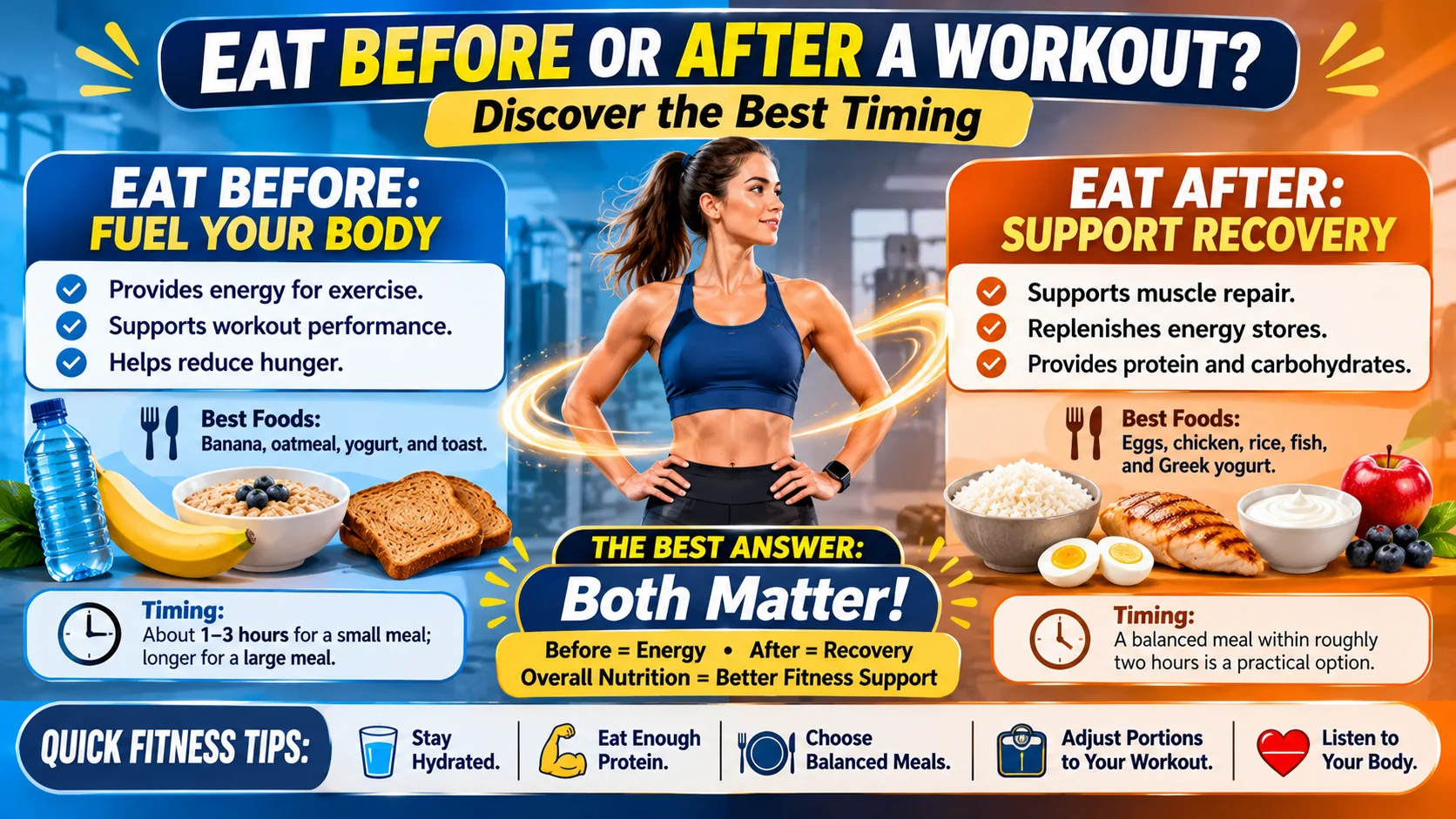
Eating before exercise helps prepare your body for physical activity. Food provides carbohydrates, which are an important energy source during exercise. Additionally, a balanced meal can help you feel stronger and more comfortable during longer or more intense sessions.
On the other hand, eating after exercise helps your body recover. Your muscles use stored energy during physical activity, and exercise places stress on muscle tissue. Therefore, eating enough protein and carbohydrates afterward supports muscle repair and replenishes energy stores.
For example, imagine you plan to complete a 60-minute strength-training session. Eating a meal with carbohydrates and protein a few hours beforehand can help you feel prepared. After training, a meal containing eggs, chicken, rice, or yogurt can provide nutrients your body needs for recovery.
Nevertheless, you do not always need a large meal before exercising. If you recently ate a balanced meal, you may already have enough energy for your workout.
The bottom line: Eat before exercise when you need energy, eat afterward to support recovery, and consider both when your workout is demanding.
Benefits of Eating Before a Workout
Eating before exercise can make a difference, especially when you participate in longer or more intense activities.
Here are some important benefits.
Provides Energy for Exercise
Your body needs energy to perform physical activities. Carbohydrates are a major fuel source, particularly during moderate and high-intensity exercise.
For instance, eating oatmeal, whole-grain bread, or a banana before training can provide carbohydrates that your body can use during exercise.
As a result, you may feel more prepared to complete your workout.
May Improve Workout Performance
A suitable pre-workout meal can help you maintain energy during exercise. This is especially useful for weightlifting, running, cycling, and other demanding activities.
Moreover, eating before exercise may help reduce feelings of hunger or weakness during longer sessions.
However, the benefits depend on your meal size, timing, and individual tolerance.
Helps Prevent Hunger During Exercise
Working out while feeling very hungry can be uncomfortable. You may find it harder to concentrate or maintain your usual training routine.
Therefore, a small snack before exercise can help you feel more comfortable.
Good options include:
- A banana.
- A small bowl of oatmeal.
- Greek yogurt.
- Whole-grain toast.
- A piece of fruit.
Supports Longer Workouts
Long exercise sessions can place greater demands on your energy stores.
For this reason, eating carbohydrates before a long workout can be particularly helpful. It may support endurance and help you maintain your effort for longer.
Nevertheless, shorter workouts may not require the same level of preparation.
Benefits of Eating After a Workout
Post-workout nutrition is important because your body needs nutrients after physical activity.
Here are some of its main benefits.
Supports Muscle Repair
Exercise places stress on your muscles. During recovery, your body uses amino acids from protein to repair and maintain muscle tissue.
Therefore, eating protein after a workout can support this natural process.
Good protein sources include:
- Eggs.
- Chicken breast.
- Fish.
- Greek yogurt.
- Milk.
- Beans.
- Lentils.
- Tofu.
For example, eating eggs with whole-grain toast after strength training provides protein along with carbohydrates.
Replenishes Energy Stores
Your body stores carbohydrates as glycogen in the muscles and liver. During exercise, it uses some of these stores for energy.
Consequently, eating carbohydrate-rich foods after a demanding workout helps replenish glycogen.
Some suitable foods include rice, potatoes, oats, bananas, and whole-grain bread.
Helps Support Muscle Growth
If your goal is to build muscle, post-workout nutrition matters. Protein provides amino acids that support muscle protein synthesis, which is part of muscle growth and repair.
However, eating protein immediately after every workout is not a magic solution.
Your total daily protein intake, resistance-training routine, sleep, and recovery habits also matter.
Supports Overall Recovery
After exercise, your body needs fluids and nutrients to recover.
A balanced meal can provide protein, carbohydrates, vitamins, and minerals. Additionally, drinking enough water helps replace fluids lost through sweat.
For that reason, post-workout nutrition should be part of your overall fitness routine.
What Should You Eat Before a Workout?
The best pre-workout foods provide energy without making you feel too full.
In most cases, carbohydrates are a useful choice. You can also include some protein, especially when eating a full meal several hours before exercise.
Best Foods to Eat Before Exercise
Bananas: Bananas provide carbohydrates and are easy to digest for many people. They are a convenient snack before a workout.
Oatmeal: Oats provide carbohydrates and fiber. A small bowl can be a good option before a morning exercise session.
Whole-Grain Toast: Toast provides carbohydrates and pairs well with peanut butter or eggs.
Greek Yogurt: Greek yogurt contains protein and can be combined with fruit for additional carbohydrates.
Rice: Rice is a useful carbohydrate source. It can be included in a balanced meal before a demanding workout.
Fruit: Apples, berries, and other fruits provide carbohydrates, water, and useful nutrients.
Best Pre-Workout Meal Ideas
| Food Combination | Main Nutrients | Suitable For |
|---|---|---|
| Banana and yogurt | Carbohydrates and protein | Light workouts |
| Oatmeal and milk | Carbohydrates and protein | Morning training |
| Toast and eggs | Carbohydrates and protein | Strength training |
| Rice and chicken | Carbohydrates and protein | Longer workouts |
| Apple and peanut butter | Carbohydrates, fats, and some protein | Light exercise |
Remember that portion size matters. A large meal immediately before exercise may cause discomfort, so choose an amount that feels comfortable.
What Should You Eat After a Workout?
After exercise, aim for a balanced meal containing protein and carbohydrates.
Protein supports muscle repair, while carbohydrates help replenish energy stores. Additionally, fruits and vegetables provide vitamins, minerals, and other useful nutrients.
Best Foods to Eat After Exercise
Eggs: Eggs provide high-quality protein and are easy to prepare. You can enjoy them boiled, scrambled, or in an omelet.
Chicken Breast: Chicken provides protein and works well with rice, potatoes, or vegetables.
Greek Yogurt: Greek yogurt is a convenient source of protein. Add berries or a banana for carbohydrates.
Fish: Fish provides protein and, depending on the type, healthy fats.
Rice: Rice provides carbohydrates that help replenish energy after exercise.
Potatoes: Potatoes provide carbohydrates and potassium.
Milk: Milk contains protein, carbohydrates, and fluids, making it a convenient recovery drink.
Lentils and Beans: These plant-based foods provide protein, carbohydrates, and fiber.
Best Post-Workout Meal Ideas
| Meal | Main Nutrients | Benefits |
|---|---|---|
| Eggs and whole-grain toast | Protein and carbohydrates | Supports recovery |
| Chicken and rice | Protein and carbohydrates | Replenishes energy |
| Greek yogurt and berries | Protein and carbohydrates | Convenient recovery snack |
| Salmon and potatoes | Protein and carbohydrates | Supports muscle recovery |
| Lentils and rice | Plant protein and carbohydrates | Balanced plant-based option |
| Milk and banana | Protein and carbohydrates | Quick snack |
You do not need expensive supplements or special fitness foods to recover after exercise. Regular foods can provide the nutrients your body needs.
How Long Should You Wait to Work Out After Eating?
The amount of time you should wait depends on the size of your meal and how your body responds to food.
A large meal takes longer to digest than a small snack. Therefore, eating too much immediately before exercise may cause bloating, nausea, or stomach discomfort.
Here is a general timing guide.
| Food Intake | Suggested Waiting Time | Examples |
|---|---|---|
| Large meal | About 3–4 hours | Chicken, rice, and vegetables |
| Small meal | About 1–3 hours | Eggs and toast |
| Light snack | About 30–60 minutes | Banana or yogurt |
| Very small snack | About 15–30 minutes | A few bites of fruit, if comfortable |
These are general guidelines, not strict rules. Some people can exercise sooner, while others need more time.
For example, a person going for a light walk may feel comfortable shortly after eating. However, someone planning an intense running session may prefer to wait longer.
Always pay attention to how your stomach feels.
How Soon Should You Eat After a Workout?
You do not need to rush to eat immediately after finishing exercise.
The idea of a very short post-workout window is often exaggerated. Your overall daily nutrition is more important than eating within a few minutes of your last exercise.
However, eating a balanced meal within roughly two hours after training is a practical approach, especially if you have not eaten for several hours.
For example:
- After morning exercise, enjoy eggs and whole-grain toast.
- After strength training, eat chicken with rice.
- After an evening run, try yogurt with fruit and oatmeal.
- After a long cycling session, choose a meal containing carbohydrates and protein.
If you ate a balanced meal before exercise, there is generally less urgency to eat immediately afterward.
Nevertheless, people who train for long periods or complete multiple sessions in one day may need more careful meal planning.
Should You Eat Before or After a Workout for Weight Loss?
If your goal is weight loss, both meal timings can work.
The most important factor is maintaining a sustainable calorie deficit over time. This means consuming fewer calories than your body uses.
Eating before exercise may help you perform better and maintain your training routine. Meanwhile, eating afterward can help control hunger and support recovery.
Some people prefer exercising before breakfast because they feel comfortable doing so. Others prefer eating first because they feel stronger and more energetic.
Neither approach guarantees greater fat loss.
Should You Exercise on an Empty Stomach?
Fasted exercise means working out without eating beforehand, usually after an overnight fast.
During fasted exercise, your body may use a higher proportion of fat for energy during the session. However, this does not automatically mean you will lose more body fat over time.
Long-term weight management depends on your overall energy balance, eating habits, and activity level.
Therefore, choose the approach that helps you exercise consistently without feeling weak or uncomfortable.
Is It Better to Eat Before or After a Workout for Muscle Gain?
If your goal is muscle growth, eating enough throughout the day is more important than choosing only one meal time.
Your muscles need adequate protein, energy, and recovery time to grow.
For better results, consider these habits:
- Eat a protein-rich meal before training when appropriate.
- Include carbohydrates to support demanding workouts.
- Consume protein after exercise.
- Eat enough calories to support your training goals.
- Follow a consistent strength-training routine.
- Get enough sleep and recovery time.
For most healthy adults who exercise regularly, a daily protein intake of approximately 1.4–2.0 grams per kilogram of body weight can support muscle development. Individual needs vary based on training, health, and personal circumstances.
For example, someone weighing 70 kg may aim for approximately 98–140 grams of protein per day.
However, you do not need to consume all your protein after exercise. Spreading it across meals throughout the day is a practical strategy.
Is It Better to Work Out in the Morning or Evening Without Eating?
Both morning and evening workouts can be effective. The best time depends on your schedule, energy levels, sleep, and personal preferences.
Morning Workouts
Some people enjoy exercising before breakfast because it fits their daily routine.
A short walk, light jog, or easy workout may feel comfortable without a full meal.
However, intense morning exercise may feel harder if you have not eaten for several hours.
If you feel weak, dizzy, or unusually tired, stop exercising and consider eating before your next session.
Evening Workouts
Evening exercise often takes place after one or more meals.
As a result, you may already have enough energy from the food you ate during the day.
Nevertheless, avoid eating a very large meal immediately before intense exercise.
Also, if late workouts affect your sleep, consider adjusting your training time.
What Happens If You Eat Before and After a Workout?
Eating both before and after exercise can be a good strategy, especially for people who train regularly or complete demanding workouts.
Before exercise, food provides energy and may help improve performance. After exercise, nutrients support recovery and help replenish energy stores.
For example, consider this simple routine:
Before the workout:
- One banana.
- A small bowl of oatmeal.
- A glass of water.
After the workout:
- Two eggs.
- Whole-grain toast.
- A glass of milk.
This combination provides carbohydrates and protein around your exercise session.
However, you do not need to eat large meals twice just because you exercise. Adjust your portions to your daily energy needs and hunger levels.
Advantages and Disadvantages of Eating Before a Workout
Eating before exercise has several benefits, but it may not suit everyone.
Advantages
- Provides energy for demanding exercise.
- May improve workout performance.
- Helps reduce hunger during training.
- Supports longer exercise sessions.
- Can make intense workouts feel more manageable.
Disadvantages
- Large meals may cause stomach discomfort.
- Eating too close to exercise can cause bloating.
- Some foods may feel heavy during running or jumping.
- Meal preparation requires additional planning.
- Eating more than needed may increase daily calorie intake.
Advantages and Disadvantages of Eating After a Workout
Post-workout meals also have important benefits and a few limitations.
Advantages
- Provides protein for muscle repair.
- Helps replenish carbohydrate stores.
- Supports recovery after demanding exercise.
- Helps meet daily nutrition needs.
- Can reduce post-workout hunger.
Disadvantages
- Waiting too long may be inconvenient for some people.
- Poor food choices may add unnecessary calories.
- Large meals may feel uncomfortable after intense exercise.
- Preparing a meal immediately after training may require planning.
- Focusing only on post-workout food can distract from overall daily nutrition.
Common Mistakes to Avoid When Eating Around Workouts
Even if you exercise regularly, certain food habits can make your routine harder.
Here are some common mistakes to avoid.
Eating a Heavy Meal Immediately Before Exercise
A large meal can cause discomfort during physical activity.
Instead, allow enough time for digestion. Choose a smaller snack if you need energy closer to your workout.
Skipping Food Despite Feeling Weak
Some people believe exercising without food always burns more fat.
However, if you feel weak, shaky, or dizzy, continuing your workout is not a good idea. Stop, rest, and address your symptoms.
Eating Too Much After Exercise
Exercise does not mean you need to eat unlimited amounts of food.
Although recovery nutrition matters, your total calorie intake still affects weight management.
Therefore, choose balanced portions that match your goals.
Ignoring Protein
Carbohydrates are useful for energy, but protein also matters for muscle repair.
Include protein-rich foods such as eggs, fish, chicken, dairy products, beans, or tofu in your daily meals.
Forgetting Water
Food is only one part of workout nutrition.
You also need enough fluids before, during, and after exercise. In particular, long sessions and hot conditions may increase your fluid needs.
Following Someone Else’s Diet Without Adjusting It
A meal plan that works for an athlete may not suit a beginner.
Your workout intensity, body size, schedule, and health needs all matter.
Consequently, build a routine that works for your own body.
Practical Workout Meal Plans
Here are some simple examples for different fitness routines.
Meal Plan for Weight Loss
Before exercise:
- One small banana.
- Water.
After exercise:
- Two boiled eggs.
- One slice of whole-grain toast.
- Fresh vegetables.
This plan provides protein and carbohydrates without requiring complicated preparation. Adjust portions to your energy needs.
Meal Plan for Muscle Gain
Before exercise:
- Oatmeal with milk.
- One banana.
After exercise:
- Chicken breast.
- Rice.
- Cooked vegetables.
This combination provides carbohydrates and protein to support demanding strength-training sessions.
Meal Plan for Morning Workouts
Before exercise:
- A banana or a small yogurt, if needed.
- Water.
After exercise:
- Eggs.
- Whole-grain toast.
- Milk or fruit.
If you prefer training before breakfast and feel comfortable doing so, you may not need a pre-workout meal for a short, easy session.
Meal Plan for Evening Workouts
Before exercise:
- A balanced lunch several hours earlier.
- A small fruit snack if hungry.
After exercise:
- Fish or chicken.
- Potatoes or rice.
- Vegetables.
This approach helps you meet your daily nutrition needs without relying on heavy meals immediately before training.
How Much Water Should You Drink Before and After Exercise?
Hydration is an important part of fitness.
Your body loses water through sweat, especially during intense exercise or hot weather. Therefore, drinking enough fluids helps maintain normal body functions.
Consider these simple hydration habits:
Before exercise: Drink water throughout the day. If you are thirsty before training, have some water before starting.
During exercise: Drink according to your thirst, workout duration, and sweat loss. Longer sessions may require more attention to fluid replacement.
After exercise: Replace fluids lost through sweating. Water is usually enough after ordinary workouts, while prolonged exercise in hot conditions may require additional electrolytes.
Avoid forcing excessive amounts of water. Your fluid needs depend on your body, environment, and activity level.
Tips for Better Workout Nutrition
You do not need a complicated diet to support your fitness routine. Instead, focus on a few useful habits.
- Eat balanced meals: Include protein, carbohydrates, healthy fats, and vegetables.
- Plan your snacks: Keep easy options such as bananas, yogurt, and nuts available.
- Choose familiar foods: Avoid trying unfamiliar meals immediately before intense exercise.
- Stay hydrated: Drink enough water throughout the day.
- Listen to your body: Adjust meal timing if you experience stomach discomfort.
- Eat enough protein: Include protein-rich foods in your daily meals.
- Prioritize recovery: Get enough sleep and allow your muscles to rest.
- Stay consistent: Regular exercise and balanced nutrition matter more than perfect meal timing.
Exercises With Answers: Test Your Knowledge
Use these questions to check what you have learned about workout nutrition.
Question: Is it better to eat before or after a workout?
Answer: Both can be beneficial. Eating before exercise provides energy, while eating afterward supports recovery.
Question: What is a good food to eat before a workout?
Answer: A banana, oatmeal, yogurt, or whole-grain toast can be suitable choices.
Question: Why should you eat protein after exercise?
Answer: Protein provides amino acids that support muscle repair and maintenance.
Question: How long should you wait after a large meal before exercising?
Answer: Many people find that waiting about 3–4 hours is comfortable, although individual needs vary.
Question: Does fasted exercise automatically burn more body fat?
Answer: No. It may increase fat use during a particular session, but long-term fat loss depends mainly on overall energy balance.
Question: Do you need to eat immediately after every workout?
Answer: No. Eating a balanced meal within a reasonable period after exercise is generally sufficient.
Question: What should you eat after strength training?
Answer: Choose protein and carbohydrate sources, such as chicken and rice, eggs and toast, or yogurt and fruit.
Related Comparisons: Before or After?
Workout nutrition is part of a bigger discussion about daily health habits. Here are some related questions worth exploring.
Protein Before or After a Workout?
Both timings can support muscle health. Eating protein before exercise provides amino acids, while eating it afterward supports muscle repair. Your total daily protein intake is more important than choosing only one time.
Creatine Before or After a Workout?
Creatine can be taken before or after exercise. However, taking it consistently each day matters more than the exact timing. Follow appropriate dosage guidance and consider professional advice if you have health concerns.
Cardio Before or After Weight Training?
The best order depends on your fitness goals. If improving strength is your main priority, weight training first may be helpful. On the other hand, if endurance is your main goal, starting with cardio may make more sense.
Stretching Before or After a Workout?
Dynamic movements are generally more suitable before exercise because they help prepare your body for activity. Static stretching can be useful after exercise or during separate flexibility sessions.
Shower Before or After a Workout?
Both can be appropriate. However, showering after exercise helps remove sweat and dirt. Allow your body to cool down before taking a shower.
Frequently Asked Questions
Is it better to eat before or after a workout for weight loss?
Both approaches can support weight loss. Eating before exercise may improve energy, while eating afterward supports recovery. Ultimately, maintaining a sustainable calorie deficit matters more than meal timing.
Is it okay to work out on an empty stomach?
Yes, some people can comfortably complete short, low-intensity workouts without eating first. However, fasted exercise may not suit everyone, especially during long or intense sessions.
Should I eat a banana before or after a workout?
You can eat a banana before or after exercise. Before training, it provides carbohydrates for energy. Afterward, it can help replenish carbohydrate stores as part of a balanced meal.
What is the best time to eat after a workout?
Eating a balanced meal within roughly two hours after exercise is a practical approach. However, there is no need to rush if you ate a proper meal before training.
Can I build muscle without eating before a workout?
Yes. You can build muscle without eating immediately before exercise. However, you still need sufficient daily calories, protein, resistance training, and recovery.
Is it bad to eat immediately after exercise?
No. Eating after exercise is generally fine. A balanced meal or snack can provide nutrients that support recovery.
Should I eat before a morning workout?
It depends on your workout and personal preference. A short walk may not require food beforehand, but a demanding training session may feel easier after a small snack.
What happens if I do not eat after a workout?
Missing one post-workout meal does not automatically prevent muscle growth or recovery. However, regularly eating too little can make it harder to meet your energy and nutrient needs.
Can I drink coffee before a workout?
Many healthy adults can enjoy coffee before exercise. Caffeine may improve alertness and exercise performance, but sensitivity varies. Avoid excessive caffeine, especially if it affects your sleep or causes unwanted symptoms.
Is protein more important before or after a workout?
Both timings can work. More importantly, getting enough protein throughout the day supports muscle repair and growth.
Can I eat eggs before a workout?
Yes. Eggs provide protein and can be part of a pre-workout meal. However, because they contain little carbohydrate, you may want to pair them with toast or fruit for additional energy.
Should I drink water before or after exercise?
Both. Drink water throughout the day, before exercise, and afterward to replace fluid losses. During longer workouts, drink according to your needs and conditions.
Key Takeaways: Is It Better to Eat Before or After a Workout?
Choosing between eating before or after exercise does not have to be difficult. Both options offer benefits, and the best approach depends on your workout, fitness goals, and personal comfort.
Remember these important points:
- Eating before exercise can provide energy and support performance.
- Eating afterward supplies nutrients for muscle repair and recovery.
- Protein and carbohydrates are important parts of workout nutrition.
- Large meals usually require more digestion time than small snacks.
- Fasted exercise does not guarantee greater long-term fat loss.
- Hydration is just as important as food timing.
- Your overall diet matters more than perfect meal timing.
Most importantly, do not follow a routine simply because it works for someone else. Choose foods and meal times that help you feel comfortable, energized, and consistent.
Conclusion
So, is it better to eat before or after a workout? The best answer is that both matter, but they serve different purposes. Eating before exercise helps provide energy, while eating afterward supports muscle repair and replenishes the energy your body uses.
If you enjoy morning workouts, a small snack may be enough before training, depending on the intensity. Meanwhile, a balanced meal containing protein and carbohydrates can help you recover afterward. For longer or more demanding workouts, eating before and after exercise may be especially useful.
Ultimately, your fitness results depend on more than meal timing. A balanced diet, regular exercise, proper hydration, sufficient sleep, and consistency all play important roles.
Choose a workout nutrition routine that fits your body and lifestyle. Eat well, train consistently, and give yourself enough time to recover.