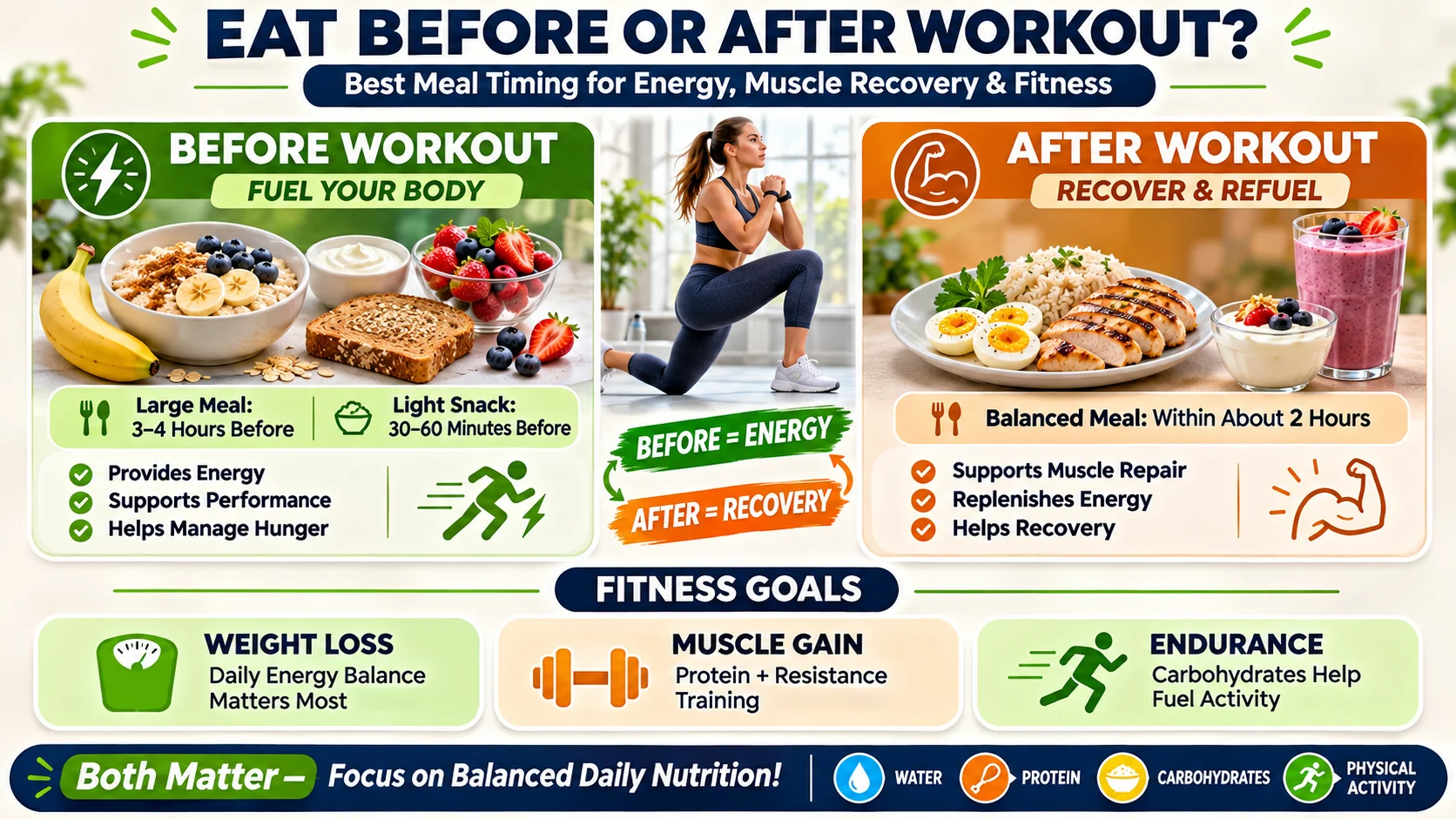
Should you eat before or after workout? Ideally, both can be beneficial. Eating before exercise provides energy and may improve performance, while eating afterward helps replenish energy stores and supports muscle recovery. Generally, eat a larger meal 3–4 hours before exercise or a light snack 30–60 minutes beforehand. Afterward, aim for a balanced meal containing protein and carbohydrates within about two hours, especially after demanding workouts.
Have you ever wondered whether it’s better to eat before or after workout sessions to improve your fitness results? Whether you’re trying to lose weight, build muscle, increase stamina, or simply feel more energetic, meal timing can influence how comfortable and prepared you feel during exercise. However, deciding when to eat isn’t always straightforward because different workout types and personal goals require different approaches.
Some people prefer exercising on an empty stomach because they feel lighter and more comfortable. Meanwhile, others need a small meal or snack to maintain energy throughout their workout. Although both approaches can work, your exercise intensity, workout duration, digestive comfort, and overall nutrition play important roles.
Moreover, eating after exercise is equally valuable because your body needs nutrients to repair muscle tissue and replenish energy stores. For example, a combination of protein and carbohydrates can support recovery after strength training, running, cycling, or other demanding activities. Nevertheless, the exact timing is usually less important than maintaining a balanced eating pattern throughout the day.
In this guide, you’ll discover whether to eat before or after exercise, the best timing for meals, foods that support different fitness goals, and common nutrition mistakes to avoid. Additionally, we’ll explore fasted workouts, hydration, muscle recovery, weight loss, and practical meal examples to help you build a routine that works for you.
Should You Eat Before or After a Workout?
For most people, eating both before and after exercise can be helpful, although it isn’t necessary to eat immediately on both sides of every workout.
A pre-workout meal provides nutrients that support physical activity. Carbohydrates are particularly useful because they help supply energy for working muscles.
Meanwhile, eating after exercise supports recovery by providing protein for muscle repair and carbohydrates for replenishing energy stores.
However, your total daily food intake remains important.
For example, someone who eats a balanced lunch and exercises two hours later may not need another snack immediately before training. Similarly, someone who finishes a short workout shortly before dinner can often simply eat their regular evening meal.
The best approach depends on when you last ate, the type of exercise you’re performing, and your individual needs.
Eating Before vs. After Exercise
| Factor | Before Workout | After Workout |
|---|---|---|
| Main purpose | Fuel exercise | Support recovery |
| Primary benefit | Energy and performance | Muscle repair and refueling |
| Key nutrients | Carbohydrates, some protein | Protein and carbohydrates |
| General timing | Larger meal 3–4 hours before, or snack closer to exercise | A meal within about 2 hours is practical |
| Food examples | Banana, oatmeal, toast | Eggs, yogurt, chicken, rice |
| Best for | Preparing for activity | Recovering from activity |
| Important consideration | Avoid digestive discomfort | Meet overall nutrition needs |
Therefore, rather than treating the two options as competitors, consider them complementary parts of your fitness routine.
Why Eating Before a Workout Matters
Eating before exercise helps ensure your body has accessible energy for physical activity.
During exercise, your muscles use energy from several sources, including stored carbohydrates and fat.
However, longer or more intense workouts generally increase the importance of carbohydrate availability.
Provides Energy for Exercise
Carbohydrates are an important source of fuel during moderate- and high-intensity physical activity.
For example, oatmeal, fruit, whole-grain bread, and rice provide carbohydrates that can support an upcoming workout.
Consequently, eating an appropriate meal beforehand may help you feel more prepared for demanding exercise.
May Improve Workout Performance
Working out when you’re very hungry can make it harder to maintain effort or concentration.
In contrast, a well-timed meal may help support performance during running, cycling, resistance training, and sports.
Nevertheless, eating too much immediately before physical activity may cause discomfort.
Therefore, both food choice and timing matter.
Helps Manage Hunger
An appropriately sized snack may prevent distracting hunger during exercise.
For instance, someone training in the late afternoon may benefit from eating fruit or yogurt if several hours have passed since lunch.
Additionally, having energy available can make a demanding session feel more manageable.
Supports Longer Workouts
People participating in extended exercise may benefit particularly from consuming carbohydrates beforehand.
According to MedlinePlus, eating carbohydrates before prolonged activity can be beneficial.
However, a short walk or gentle stretching session usually doesn’t require special pre-exercise fueling.
How Long Before a Workout Should You Eat?
The ideal timing depends mainly on meal size, food composition, and personal digestive comfort.
Generally, larger meals need more time for digestion, while smaller snacks can be eaten closer to exercise.
Three to Four Hours Before Exercise
This is a practical window for a substantial, balanced meal.
For example, you might eat:
- Chicken with rice and vegetables.
- Oatmeal with yogurt and fruit.
- A turkey sandwich with a side of fruit.
- Eggs with whole-grain toast.
- Lentils, rice, and cooked vegetables.
These meals provide a combination of carbohydrates, protein, and other nutrients.
Additionally, the longer interval allows more time for digestion.
One to Two Hours Before Exercise
A smaller meal or substantial snack may be appropriate.
Good examples include:
- Greek yogurt with fruit.
- A banana with a modest amount of peanut butter.
- Oatmeal with milk.
- Whole-grain toast with an egg.
- A small fruit smoothie.
However, people who experience digestive discomfort may need a longer interval.
Thirty to Sixty Minutes Before Exercise
When your workout begins soon, choose a light, easily digested snack if you’re hungry or need energy.
Examples include:
- A banana.
- A few crackers.
- A small slice of toast.
- Applesauce.
- A small serving of dried fruit.
At this stage, carbohydrate-rich foods that are relatively low in fat and fiber may be easier to tolerate.
Nevertheless, some people prefer not to eat within the final hour before exercising.
Therefore, experiment with timing during ordinary workouts rather than trying unfamiliar foods immediately before an important training session.
Best Foods to Eat Before a Workout
The best pre-exercise foods generally provide energy without causing excessive fullness.
Carbohydrates are especially useful, while a moderate amount of protein can contribute to overall daily nutrition.
Bananas
Bananas provide carbohydrates and are convenient for people who need a quick snack.
Additionally, they contain potassium, an important mineral involved in normal muscle and nerve function.
For example, eating a banana before a morning run may be a comfortable option for some people.
Oatmeal
Oatmeal provides carbohydrates and fiber.
Because its fiber content can slow digestion, it is often more comfortable when eaten well before exercise rather than immediately beforehand.
Moreover, adding milk or yogurt provides additional protein.
Whole-Grain Toast
Whole-grain toast offers carbohydrates and can be combined with eggs, yogurt, or nut butter.
However, a large amount of fat-rich toppings shortly before vigorous activity may feel heavy.
Therefore, adjust portion sizes to your workout schedule.
Yogurt and Fruit
Yogurt supplies protein, while fruit contributes carbohydrates.
Together, they create a convenient snack for many people.
Additionally, the combination may work particularly well when eaten an hour or two before exercise.
Rice and Lean Protein
Rice with chicken, tofu, or another protein source can work well as a larger pre-workout meal.
However, it’s generally better to leave sufficient time for digestion.
This option may be especially practical for people exercising after lunch or dinner.
Why Eating After a Workout Matters
After exercise, your body continues repairing tissues and restoring energy reserves.
Nutrition helps support these processes.
However, recovery needs differ according to workout intensity, duration, and overall eating patterns.
Supports Muscle Repair
Resistance training creates a stimulus that encourages muscles to adapt.
Dietary protein provides amino acids needed for muscle protein synthesis.
Therefore, consuming enough protein throughout the day supports training adaptations and recovery.
Replenishes Energy Stores
Carbohydrates help restore muscle glycogen, which is a stored form of carbohydrate.
This becomes especially important after prolonged or demanding exercise.
For example, someone completing a long cycling workout may need more carbohydrate replacement than a person taking a short walk.
Supports Recovery Between Sessions
People who exercise multiple times in one day may benefit from paying closer attention to post-workout nutrition.
Consequently, timely meals become particularly useful when recovery time is limited.
Helps Meet Daily Nutrient Needs
Post-workout meals can contribute protein, carbohydrates, healthy fats, vitamins, and minerals.
Moreover, regularly eating balanced meals supports general health beyond exercise performance.
How Soon Should You Eat After a Workout?
For many recreational exercisers, eating a balanced meal within approximately two hours after training is a practical guideline.
However, there is no universal requirement to eat within a strict 30-minute window.
The importance of immediate eating depends on several factors, including when you last ate and when you plan to exercise again.
Within Thirty to Sixty Minutes
Eating sooner may be useful after particularly intense or prolonged exercise, especially when another workout is scheduled later that day.
For example, an athlete training twice daily might benefit from promptly consuming carbohydrates and protein.
Nevertheless, someone who recently ate a protein-rich meal before training may have less urgency.
Within One to Two Hours
This is a convenient recovery window for many people.
A balanced meal might include:
- Grilled chicken with rice.
- Eggs with toast and fruit.
- Greek yogurt with oats.
- Tofu with potatoes and vegetables.
- Fish with quinoa.
Moreover, the meal can fit naturally into your usual breakfast, lunch, or dinner schedule.
What If You Eat Later?
Missing an immediate post-workout snack doesn’t automatically eliminate the benefits of exercise.
However, consistently under-eating or failing to meet protein and energy needs may negatively affect recovery.
Therefore, focus on an appropriate daily eating pattern rather than worrying about a few minutes.
Best Foods to Eat After a Workout
Post-exercise meals should generally include protein and carbohydrates, with other nutrients supporting overall health.
Eggs
Eggs provide high-quality protein.
For example, eggs with whole-grain toast and fruit can create a convenient recovery meal.
Additionally, eggs contain several essential nutrients.
Greek Yogurt
Greek yogurt is a protein-rich option that can be paired with fruit, oats, or cereal.
Consequently, it works well as a simple snack after exercise.
Chicken and Rice
Chicken provides protein, while rice supplies carbohydrates.
Together, they offer a practical meal for people recovering from resistance training or endurance exercise.
Fish and Potatoes
Fish provides protein, and potatoes help replace carbohydrates used during activity.
Moreover, certain fish, such as salmon, provide omega-3 fatty acids.
Beans, Lentils, and Tofu
Plant-based foods can also support exercise recovery.
For example, lentils with rice or tofu with noodles provide protein and carbohydrates.
Therefore, animal products are not necessary for building an effective recovery meal.
Fruit Smoothies
A smoothie made with milk or fortified soy milk, yogurt, and fruit can provide convenient nutrition.
However, the nutrient content depends on the ingredients and portions.
For better recovery, choose combinations that provide meaningful protein alongside carbohydrates.
Eating Before or After Workout for Weight Loss
For weight loss, overall energy balance generally matters more than choosing one specific eating window.
Weight loss occurs when energy expenditure exceeds energy intake over time.
However, food timing can influence hunger, workout quality, and adherence to an eating plan.
Is Exercising Before Breakfast Better for Fat Loss?
Exercising before eating is often called fasted training.
During certain types of fasted exercise, the body may use a greater proportion of fat as fuel.
However, burning more fat during an individual workout does not necessarily produce greater long-term body-fat loss.
Therefore, fasted exercise shouldn’t be considered a guaranteed shortcut to losing weight.
Can Eating Before Exercise Help Weight Loss?
Yes, particularly when food improves workout performance or prevents excessive hunger.
For example, someone who feels weak while exercising without breakfast may perform better after a small snack.
Additionally, maintaining a consistent exercise routine is important for sustainable weight management.
What Should You Eat After Exercise When Losing Weight?
Choose satisfying meals that provide adequate protein, vegetables, and appropriate portions of carbohydrates.
Examples include:
- Grilled chicken salad with potatoes.
- Greek yogurt with berries.
- Lentil soup with whole-grain bread.
- Tofu with vegetables and rice.
- Eggs with toast and fruit.
Ultimately, successful weight management depends on a sustainable nutrition plan, not simply skipping meals around exercise.
Eating Before or After Workout for Muscle Gain
Building muscle requires resistance training, sufficient nutrition, and adequate recovery.
Although meal timing can help, total daily protein intake is especially important.
Protein Before Exercise
Eating protein before a workout can contribute to the amino acids available for muscle repair and adaptation.
For example, yogurt, eggs, tofu, or a protein-containing meal may be useful.
However, you don’t need to consume protein immediately before every training session.
Protein After Exercise
Protein consumed after resistance training supports muscle protein synthesis.
Research from the International Society of Sports Nutrition emphasizes both sufficient total protein and appropriate distribution across the day.
For many healthy, exercising adults pursuing muscle growth, approximately 1.4–2.0 grams of protein per kilogram of body weight per day is a commonly cited evidence-based range.
Individual requirements vary, however, and not everyone needs the upper end.
How Much Protein Should You Eat After Training?
A meal providing roughly 20–40 grams of protein is a useful general reference for many exercising adults.
However, optimal portions depend on body size, age, total daily intake, and training demands.
For example, a recovery meal containing chicken, rice, and vegetables may provide sufficient protein without requiring a supplement.
Therefore, prioritize meeting your overall daily needs rather than focusing exclusively on one shake or snack.
Is Working Out on an Empty Stomach Good or Bad?
Exercising without eating first isn’t automatically harmful or beneficial for everyone.
Some people feel comfortable performing gentle morning activities before breakfast.
Meanwhile, others experience fatigue, dizziness, nausea, or reduced exercise performance.
When Fasted Exercise May Be Comfortable
Short, low-intensity activities may be manageable without an immediate pre-workout meal.
Examples include:
- A gentle morning walk.
- Light stretching.
- Easy mobility exercises.
- Short, comfortable cycling sessions.
- Low-intensity yoga.
However, your comfort also depends on how much you ate previously and your individual health.
When Eating First May Be Better
A pre-exercise meal or snack can be particularly valuable before:
- Intense strength training.
- Long-distance running.
- High-intensity interval training.
- Competitive sports.
- Extended cycling sessions.
Additionally, people prone to low blood sugar may need specific nutrition precautions.
If you have diabetes, take glucose-lowering medication, are pregnant, or have a medical condition affecting nutrition or exercise, seek individualized advice before adopting a fasting routine.
Meal Timing for Morning Workouts
Morning training can make food timing challenging, especially when you exercise shortly after waking.
However, your approach can remain simple.
If You Have Thirty Minutes
You might choose a banana or small serving of toast if you feel hungry.
Alternatively, someone performing a gentle workout may feel comfortable without a snack.
If You Have One Hour
Consider a light breakfast such as yogurt with fruit.
Additionally, drink some water before beginning activity.
If You Have Two or More Hours
A more substantial breakfast may be appropriate.
For example, oatmeal with milk, eggs and toast, or another familiar meal can provide energy.
After training, return to your regular eating schedule and include sufficient protein and other nutrients.
Meal Timing for Evening Workouts
Evening workouts often follow several meals, so immediate pre-workout fueling may be less necessary.
For example, someone who eats lunch at 1 p.m. and exercises at 6 p.m. may benefit from an afternoon snack.
Meanwhile, a person who eats a substantial meal at 4 p.m. might not need additional food before a 6 p.m. session.
After evening exercise, a balanced dinner can serve as the recovery meal.
However, eating a very large meal immediately before bed may cause discomfort for some people.
Therefore, choose portions and timing that work with your digestion and sleeping schedule.
What Should You Eat Before Cardio?
Cardio workouts vary considerably in intensity and duration.
A short walk requires less dedicated fueling than a prolonged run or cycling session.
Short Cardio Sessions
For exercise lasting less than an hour, your normal meals may provide enough energy.
However, a small snack can be helpful when you’re hungry.
Longer Endurance Sessions
Carbohydrates become increasingly important during extended exercise.
For example, oatmeal, toast, fruit, or rice can provide useful pre-exercise fuel.
Additionally, prolonged vigorous activity may require carbohydrates during the workout.
The appropriate amount depends on exercise duration, intensity, and individual tolerance.
What Should You Eat Before Weightlifting?
Weightlifting requires energy and supports muscle adaptation through resistance training.
Therefore, meals containing carbohydrates and protein can be useful.
Examples include:
- Oatmeal with milk.
- Greek yogurt and fruit.
- Chicken with rice.
- Eggs with toast.
- Tofu and noodles.
However, heavy meals immediately before lifting may interfere with comfort.
Consequently, leave enough time between a substantial meal and your training session.
Should You Eat During a Workout?
Most short recreational workouts do not require additional food during exercise.
Water is generally sufficient for many sessions lasting less than an hour.
However, prolonged endurance activities may benefit from carbohydrate intake during exercise.
For example, long-distance runners and cyclists sometimes use sports drinks, energy gels, or other easily digested carbohydrate sources.
Additionally, hot conditions and heavy sweating may increase hydration and electrolyte needs.
Nevertheless, sports products are not necessary for every gym session.
Hydration Before, During, and After Exercise
Hydration is an important part of exercise nutrition.
Even a well-planned meal may not fully support performance if fluid intake is inadequate.
Before Exercise
Drink fluids regularly throughout the day.
Additionally, drinking water before training can help you begin adequately hydrated.
During Exercise
For many shorter workouts, water is an appropriate choice.
However, longer activities or sessions involving substantial sweating may require additional fluids and electrolytes.
Avoid forcing excessive amounts of water, since overhydration can also be dangerous.
After Exercise
Replace fluids lost through sweating according to your needs.
Water is suitable for many recreational workouts, while meals can also provide electrolytes.
Therefore, consider hydration alongside food choices rather than treating it as an unrelated issue.
Sample Pre-Workout and Post-Workout Meal Plan
The following examples provide general meal ideas rather than personalized calorie prescriptions.
| Workout Time | Before Exercise | After Exercise |
|---|---|---|
| Early morning | Banana or toast if needed | Eggs, oats, and fruit |
| Late morning | Breakfast with yogurt and oats | Chicken with rice |
| Afternoon | Fruit and yogurt | Fish, potatoes, vegetables |
| Evening | Light sandwich or familiar snack | Tofu, rice, and vegetables |
| Long endurance workout | Carbohydrate-rich meal | Protein and carbohydrate-rich meal |
| Short, gentle activity | Regular meals may be sufficient | Continue normal eating schedule |
Food portions should reflect your hunger, activity level, body size, and nutritional goals.
Moreover, these examples can be adjusted for dietary preferences and allergies.
Common Mistakes in Workout Nutrition
Avoiding several common errors can make meal planning easier and more effective.
Eating a Heavy Meal Immediately Before Exercise
Large meals can increase the risk of nausea, bloating, or abdominal discomfort during vigorous movement.
Therefore, allow sufficient digestion time whenever possible.
Skipping Food Despite Feeling Weak
Some people force themselves to exercise without eating because they believe it guarantees greater fat loss.
However, low energy may reduce workout quality and make exercise unpleasant.
Instead, consider a small snack when needed.
Ignoring Post-Workout Nutrition
Recovery requires adequate nutrients over time.
Consequently, regularly failing to eat enough can interfere with adaptation and recovery.
Focusing Only on Protein
Protein is essential, but carbohydrates also support exercise performance and glycogen replenishment.
Moreover, dietary fats, micronutrients, and adequate total energy remain important.
Relying on Supplements Instead of Meals
Protein powders and sports drinks can be convenient, but they aren’t essential for most recreational exercisers.
For example, ordinary foods such as eggs, yogurt, beans, rice, and fruit can provide useful recovery nutrition.
Believing the Anabolic Window Lasts Only Thirty Minutes
The idea that muscle-building opportunities disappear immediately after exercise oversimplifies nutrient timing.
Although eating soon afterward may be useful, the benefits of protein intake extend beyond a narrow window.
Therefore, a consistent daily protein intake is usually more important than rushing to consume a shake within minutes.
How to Choose the Best Eating Schedule
The right routine should fit your exercise demands, digestion, and personal goals.
Consider Workout Intensity
High-intensity exercise often benefits from adequate fueling beforehand.
Meanwhile, gentle exercise may fit comfortably between normal meals.
Pay Attention to Digestion
Some people tolerate a small snack shortly before training, whereas others need more time.
Consequently, personal comfort should influence your schedule.
Think About Your Fitness Goal
Someone training for endurance events may have different carbohydrate needs than someone performing light exercise for general health.
Similarly, a person pursuing muscle gain may need more total protein and energy than someone maintaining their current activity level.
Maintain Consistency
A routine that you can follow regularly is generally more useful than a complicated schedule you struggle to maintain.
Therefore, build your meals around a realistic daily pattern.
Frequently Asked Questions
Is it better to eat before or after a workout?
Both can be beneficial. Eating before exercise helps provide energy, while eating afterward supports muscle recovery and replenishes energy stores. However, the best schedule depends on your workout duration, intensity, and previous meals.
Should I eat before or after a workout to lose weight?
Neither timing option automatically produces greater weight loss. Overall energy balance, adequate nutrition, and consistent activity matter more. Nevertheless, eating at times that support comfortable exercise and manageable hunger can help you maintain a sustainable routine.
Should I eat before or after gym for muscle gain?
Eating protein-containing meals before or after resistance training can support muscle development. However, meeting daily protein and calorie needs is more important than choosing only one eating window.
Can I work out immediately after eating?
Light activity, such as a comfortable walk, may be fine after eating. However, vigorous workouts immediately after a large meal can cause digestive discomfort. Therefore, allowing more digestion time is generally sensible.
Is a banana good before a workout?
Yes. A banana provides carbohydrates and can be a convenient pre-workout snack. Additionally, it is easy to carry and requires no preparation.
What happens if I don’t eat after exercise?
Missing one immediate post-workout meal usually doesn’t prevent recovery if your overall nutrition is sufficient. However, regularly under-eating may affect muscle repair, energy levels, and future training performance.
Should I exercise on an empty stomach?
Some people tolerate short, low-intensity exercise without eating first. However, fasted exercise isn’t necessary for weight loss, and it may reduce comfort or performance for others. People with conditions affecting blood glucose should seek individualized guidance.
How much protein should I eat after working out?
Approximately 20–40 grams of protein in a meal is a useful reference for many active adults. However, body size, training demands, and total daily intake influence individual needs.
Can I drink coffee before exercising?
Yes, many healthy adults tolerate moderate caffeine before exercise, and it may improve alertness and performance. However, caffeine can cause anxiety, palpitations, digestive upset, or sleep disruption in sensitive people. Therefore, consider your tolerance and the time of day.
Is it okay to eat dinner after an evening workout?
Yes. Dinner can serve as a recovery meal when it provides adequate protein, carbohydrates, and other nutrients. Nevertheless, portion size and meal timing should suit your digestive comfort and sleep routine.
Should I drink a protein shake immediately after training?
Not necessarily. A protein shake is convenient when a regular meal isn’t available, but immediate consumption is not essential for everyone. Ordinary protein-rich foods can also meet recovery needs.
What should I avoid eating before a workout?
Very large meals and foods high in fat or fiber immediately before vigorous exercise may cause discomfort for some people. Additionally, unfamiliar foods can increase the risk of digestive problems. Choose foods you already tolerate well.
Conclusion
Deciding whether to eat before or after workout sessions doesn’t have to be complicated. Both eating windows serve useful purposes: pre-workout nutrition helps provide energy for physical activity, while post-workout meals support muscle repair, recovery, and glycogen replenishment.
Furthermore, the best approach depends on your fitness goals, exercise intensity, schedule, and personal comfort. Someone completing a short morning walk may not need a special snack, whereas a person performing demanding strength training or endurance exercise may benefit from more deliberate meal planning.
Most importantly, total daily nutrition matters more than following a rigid meal-timing rule. Consuming adequate protein, carbohydrates, fluids, and other essential nutrients can help support long-term training and general health.
Ultimately, choose a sustainable eating routine that helps you feel energized during exercise and adequately nourished afterward. With balanced meals, appropriate timing, and consistent physical activity, you can support your fitness goals without unnecessary restrictions.