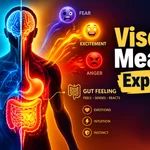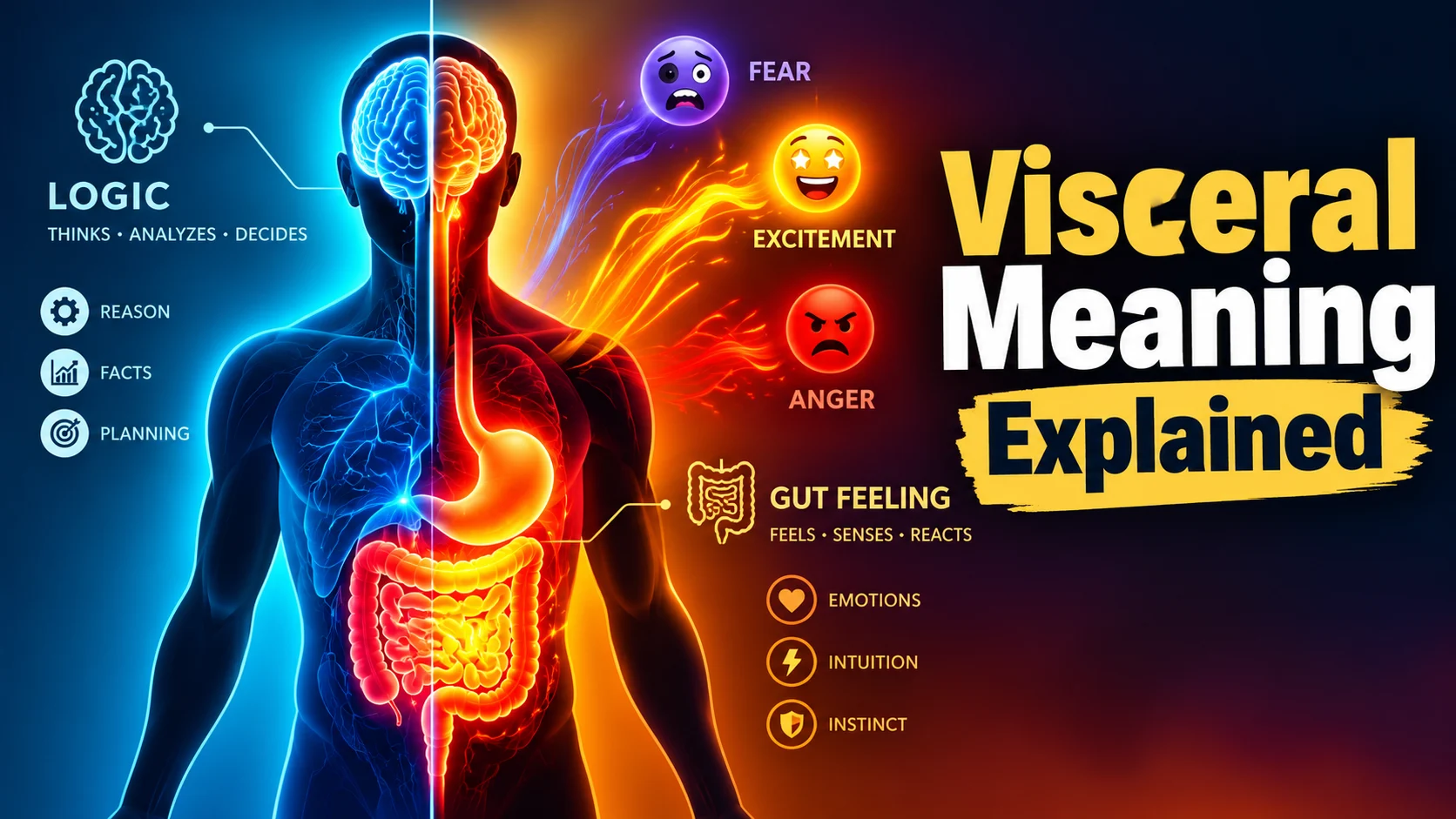
Visceral meaning refers to a deep, instinctive reaction that comes from your gut rather than your logical mind. A visceral feeling is immediate, intense, and often physical, like fear, excitement, or disgust that you feel without thinking.
What Is the Visceral Meaning? (Clear Definition)
At its core, visceral meaning describes something you feel deeply and instantly without thinking it through.
It’s not calm. It’s not calculated. It hits you fast.
A visceral reaction comes from your body, not just your mind. You don’t analyze it. You experience it.
Think about this:
You hear a loud bang and jump immediately.
You feel nervous before speaking in public.
You instantly like or dislike someone.
That’s visceral.
What Does Visceral Mean in Simple Terms?
Let’s simplify it.
Visceral = gut-level feeling.
It’s the kind of reaction that:
- Happens instantly
- Feels strong and physical
- Doesn’t need logic or explanation
Simple analogy:
- Logical mind: “Let me think about this.”
- Visceral response: “I feel this right now.”
Your body reacts before your brain finishes thinking.
🧠 Origin and Etymology of Visceral
The word “visceral” comes from the Latin word “viscera”, which means internal organs.
Originally, it referred to:
- The stomach
- The intestines
- The inner body parts
Over time, people noticed something interesting.
Strong emotions often come with physical sensations:
- Butterflies in your stomach
- Tight chest
- Sudden chills
So, “visceral” evolved to describe deep emotional reactions tied to the body.
Visceral Meaning Across Different Contexts
Visceral Meaning in Everyday Language
In daily conversation, “visceral” usually describes:
- Strong reactions
- Immediate feelings
- Emotional intensity
Examples:
- “I had a visceral fear when I saw the snake.”
- “Her speech created a visceral response in the audience.”
Visceral Meaning in Psychology
Psychology gives this word more depth.
A visceral response is linked to:
- The limbic system (emotional brain)
- The nervous system
- The fight-or-flight response
When something triggers you:
- Your heart rate increases
- Muscles tense
- Hormones like adrenaline release
This happens before conscious thought.
Key Insight:
The body reacts first. The mind explains later.
Visceral Meaning in Literature and Writing
Writers use visceral imagery to make readers feel something physically.
Instead of saying:
- “He was scared”
They write:
- “His hands trembled, breath caught, and his chest tightened.”
That’s visceral writing.
It pulls readers into the experience.
Visceral Meaning in Media and Entertainment
Movies, games, and music rely heavily on visceral impact.
Examples:
- Horror films trigger visceral fear
- Action scenes create visceral excitement
- Emotional songs cause deep emotional responses
Why it works:
- It bypasses logic
- It connects directly with emotions
⚡ Real-Life Examples of Visceral Reactions
Here are situations you’ve likely experienced:
- Jumping when a door slams loudly
- Feeling sick after seeing something disturbing
- Instantly trusting or distrusting someone
- Getting chills during a powerful speech
- Feeling excitement before opening good news
These are not slow thoughts.
They are automatic reactions.
📊 Visceral vs Emotional vs Instinctive (Clear Comparison)
| Term | Meaning | Key Difference |
|---|---|---|
| Visceral | Gut-level, physical feeling | Strong + bodily |
| Emotional | General feelings | Can be slower |
| Instinctive | Natural survival response | Biological |
Quick takeaway:
- Visceral = felt in the body
- Emotional = felt in the mind
- Instinctive = built for survival
🧩 Synonyms of Visceral (And When to Use Them)
Common synonyms:
- Instinctive
- Gut-level
- Raw
- Intense
- Primal
- Unfiltered
Example usage:
- “A raw reaction”
- “A primal fear”
- “An instinctive response”
When NOT to use them:
Avoid replacing “visceral” when:
- You’re discussing logic or reasoning
- You need precise scientific wording
🚫 Opposite of Visceral (Antonyms Explained)
Visceral is the opposite of thinking things through.
Antonyms:
- Logical
- Rational
- Analytical
- Calculated
Example:
- Visceral: “I hate this instantly.”
- Rational: “Let me evaluate this first.”
✍️ How to Use “Visceral” in a Sentence
Simple sentences:
- “The movie created a visceral reaction.”
- “She felt a visceral fear.”
Professional tone:
- “The campaign triggered a visceral emotional response.”
Creative writing:
- “A visceral chill ran down his spine.”
🧠 Why Visceral Reactions Matter
Visceral responses aren’t random. They serve a purpose.
Key reasons:
1. Speed
They help you react instantly.
2. Survival
They protect you from danger.
3. Decision-making
Sometimes your gut knows before your brain.
4. Emotional awareness
They reveal what truly matters to you.
⚠️ Downside of Visceral Reactions
They aren’t always reliable.
Problems include:
- Overreacting
- Bias and prejudice
- Emotional decisions without logic
Example:
You might dislike someone instantly without reason.
That’s visceral—but not always accurate.
🧬 The Science Behind Visceral Feelings
Let’s break it down.
What happens in your body:
- Brain detects a stimulus
- Limbic system activates
- Adrenaline releases
- Body prepares for action
Key systems involved:
- Nervous system
- Hormonal system
- Sensory processing
Result:
A deep emotional response you feel physically.
🎯 Common Types of Visceral Emotions
Visceral reactions aren’t limited to fear.
Examples:
- Visceral fear → danger response
- Visceral anger → sudden rage
- Visceral love → deep attachment
- Visceral disgust → physical rejection
- Visceral excitement → intense thrill
Each one feels strong and immediate.
💬 Visceral Meaning in Modern Usage
Today, the word appears everywhere:
- Movie reviews
- Social media
- Gaming
- Music
Examples:
- “That game feels visceral.”
- “A visceral storytelling experience.”
It signals intensity and authenticity.
⚠️ Common Mistakes When Using Visceral
Avoid these errors:
1. Using it for mild emotions
Wrong: “I had a visceral opinion about lunch.”
2. Confusing it with “emotional”
Not all emotions are visceral.
3. Overusing it
It loses impact if used too often.
🧠 Visceral vs Intuitive (Important Difference)
| Feature | Visceral | Intuitive |
|---|---|---|
| Source | Body | Mind + experience |
| Speed | Immediate | Fast but thoughtful |
| Nature | Physical sensation | Inner knowing |
Example:
- Visceral: You feel fear instantly
- Intuitive: You sense something is wrong
📌 Quick Summary of Visceral Meaning
- It’s a gut-level reaction
- It happens instantly
- It feels physical and emotional
- It’s tied to instinct and survival
- It can be powerful but not always accurate
Frequently Asked Questions
What is a visceral feeling?
A visceral feeling is a deep, instinctive emotional response that you feel physically in your body without thinking.
Is visceral positive or negative?
It can be both. Fear is negative. Excitement can be positive.
What is a visceral reaction example?
Jumping at a loud noise or feeling instant fear during a scary movie.
Does visceral mean emotional or physical?
It’s both. It combines emotional intensity with physical sensation.
What is the difference between visceral and emotional?
Visceral is immediate and physical. Emotional can be slower and more thoughtful.
🧠 Final Insight
Here’s the truth most people miss.
Visceral reactions are your body speaking before your mind catches up.
Sometimes they protect you.
Sometimes they mislead you.
The key is knowing when to trust your gut and when to pause and think.

Charlotte Wilson is a language writer passionate about word meanings, synonyms, and clear communication. She creates accurate and engaging content to help readers expand their vocabulary and language skills.